The Blue Cities of Morocco — Discover the Magic of the Blue Pearl
Morocco is a country known for its vibrant colors, rich culture, and diverse landscapes, but few places capture global attention like its famous blue cities. Hidden in the mountains of northern Morocco, these destinations offer a unique visual experience where streets, walls, and houses are painted in beautiful shades of blue, creating a peaceful and magical atmosphere.
Among them, Chefchaouen stands out as one of the most picturesque destinations in the world. With its narrow blue alleyways, charming architecture, and relaxed lifestyle, the city attracts travelers seeking cultural discovery, photography opportunities, and authentic Moroccan experiences.
Beyond their visual beauty, Morocco’s blue cities reflect deep historical, cultural, and spiritual traditions. The use of blue color is connected to religious symbolism, Andalusian heritage, and local identity, making these cities not only stunning destinations but also meaningful cultural spaces.
Visiting Morocco’s blue cities offers travelers a chance to explore history, interact with local communities, discover traditional crafts, and experience one of the most unique urban landscapes in the world. Whether you are a cultural traveler, photographer, or adventure seeker, Morocco’s blue cities promise an unforgettable journey.
What Are Morocco’s Blue Cities?
Morocco’s blue cities are urban spaces where buildings, streets, and houses are painted in different shades of blue, creating a distinctive and visually striking environment. These cities are mainly located in northern Morocco, especially in mountainous regions where architecture blends harmoniously with nature and cultural traditions.
The blue color is not only an aesthetic choice but also carries historical, cultural, and symbolic meanings. Over time, these cities have become major tourist attractions, offering visitors a unique atmosphere that combines beauty, spirituality, and traditional Moroccan lifestyle.
Meaning of the Blue Color in Moroccan Culture
The blue color in Moroccan cities holds deep cultural and spiritual significance. Traditionally, blue is associated with peace, protection, and spirituality. Many believe that blue represents the sky and heaven, creating a sense of calm and purity within urban spaces.
In some traditions, blue is also believed to protect against negative energy and bring good luck. This symbolic meaning explains why residents continue the tradition of repainting walls and streets, preserving the city’s unique identity and cultural heritage.
History Behind Blue-Painted Cities
The tradition of painting buildings blue is often linked to historical influences from Andalusian and Jewish communities who settled in northern Morocco centuries ago. These communities introduced architectural styles and cultural practices that shaped the identity of blue-painted towns.
Over time, the use of blue became a defining feature of cities like Chefchaouen, transforming them into iconic cultural destinations. The tradition continues today, maintained by local communities who value its historical and spiritual importance.
Why Blue Cities Attract Travelers
Morocco’s blue cities attract travelers from around the world for several reasons:
Their unique visual beauty and photogenic streets.
A peaceful atmosphere different from busy urban centers.
Rich cultural and historical heritage.
Authentic local lifestyle and artisan traditions.
These elements create an immersive experience where visitors can explore traditional architecture, local markets, and scenic mountain views while enjoying a calm and welcoming environment.
Chefchaouen — Morocco’s Famous Blue City
Chefchaouen is the most famous blue city in Morocco and one of the country’s most visited destinations. Located in the heart of the Rif Mountains, the city is known for its stunning blue-painted streets, peaceful atmosphere, and unique cultural identity. It offers visitors a perfect combination of natural beauty, history, and traditional Moroccan charm.
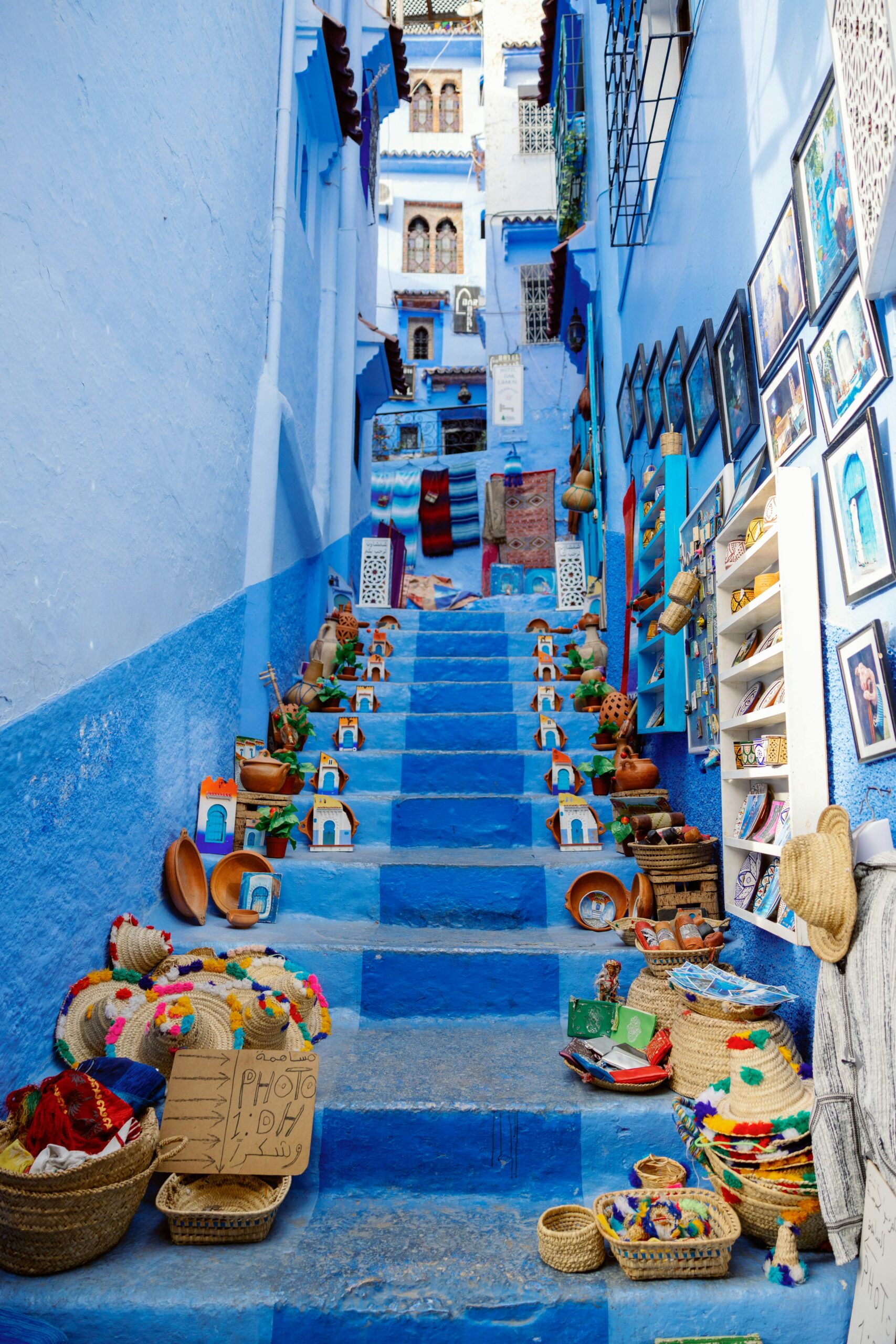
The city’s blue alleys, staircases, and buildings create a dreamlike setting that attracts photographers, artists, and travelers seeking tranquility away from busy urban life.
History and Origins of Chefchaouen
Chefchaouen was founded in 1471 as a small fortress to defend the region against foreign invasions. Over time, the city became home to Muslim and Jewish refugees from Andalusia, who greatly influenced its architecture, culture, and traditions.
The tradition of painting the city blue is often linked to Jewish communities who associated the color with spirituality and divine protection. Today, residents continue this tradition, maintaining the city’s distinctive identity and cultural heritage.
Architecture and Unique Streets
The architecture of Chefchaouen reflects Andalusian and Moroccan influences, characterized by:
Narrow winding streets and stairways
Blue-painted walls in different shades
White and blue houses with traditional doors
Decorative tiles and handcrafted details
Walking through the medina feels like exploring an open-air museum, where every corner offers beautiful scenery and authentic Moroccan design.
Main Attractions in Chefchaouen
Visitors can explore several key attractions in the city, including:
The Medina → A peaceful old town filled with blue alleys and local shops.
Kasbah Museum → A historic fortress showcasing the city’s heritage and gardens.
Mountain Views → Scenic landscapes and hiking opportunities in the surrounding region.
These attractions make Chefchaouen a destination that combines culture, relaxation, and natural beauty.
Local Crafts and Traditional Markets
Chefchaouen is also known for its vibrant artisan culture. Local markets sell:
Handmade wool garments and textiles
Traditional woven blankets
Leather goods
Handcrafted souvenirs
These crafts reflect the region’s cultural heritage and support local artisans, making shopping part of the cultural experience.
Cultural Significance of the Blue Color
The blue color in Morocco’s cities is not just a visual treat—it carries deep cultural, spiritual, and historical meanings that have been preserved for centuries. This significance explains why blue-painted walls continue to dominate towns like Chefchaouen, creating a unique identity and sense of place.
Spiritual and Religious Meanings
Blue has traditionally been associated with spirituality and divine protection in Moroccan culture. Many believe that the color represents the sky and heaven, symbolizing peace, tranquility, and connection to higher realms. In Jewish tradition, which influenced northern Moroccan cities, blue was used to signify holiness and ward off negative energy.
This spiritual symbolism is reflected not only in architecture but also in local customs and community practices, making the color a living part of cultural life.
Andalusian and Jewish Influences
The history of Morocco’s blue cities is closely tied to Andalusian refugees and Jewish communities who settled in northern Morocco during the 15th and 16th centuries. They introduced distinctive architectural styles, urban planning, and painting traditions.
The combination of Islamic and Andalusian artistic influences shaped the medina’s layout, building colors, and decorative elements. Today, these influences remain visible in the intricate doors, blue walls, and urban harmony of cities like Chefchaouen.
Symbolism of Blue in Moroccan Identity
For locals, the blue color has become a symbol of regional and cultural identity. It conveys pride in heritage and reflects a commitment to maintaining traditions. Blue streets, doors, and alleys serve as visual markers of the city’s unique character, attracting visitors while reinforcing the community’s sense of belonging.
In essence, the color blue in these cities is a bridge between the past and present, connecting history, spirituality, and daily life into one cohesive cultural experience.
Tourist Experience in Morocco’s Blue Cities
Visiting Morocco’s blue cities offers travelers a rich and immersive cultural experience. From photography to shopping and sampling local cuisine, every moment provides insight into the lifestyle, traditions, and artistry of northern Morocco.
Photography and Scenic Views
The blue-painted streets, alleys, and walls make these cities a photographer’s paradise. Travelers can capture stunning contrasts between blue facades, colorful doors, and natural mountain backdrops. Sunrise and sunset are particularly magical times, casting soft light across the medina and enhancing the vibrant colors.
Photographers and travelers alike find endless inspiration in the intricate patterns, cobblestone streets, and scenic viewpoints overlooking the Rif Mountains.
Local Markets and Artisan Crafts
Blue cities are home to bustling local markets where artisans sell traditional Moroccan goods. Visitors can explore:
Handwoven textiles and rugs
Leather goods crafted in traditional tanneries
Ceramics and pottery reflecting local design
Handcrafted souvenirs like jewelry and woodwork
Shopping in these markets is an opportunity to support local communities and bring home authentic Moroccan crafts.
Interaction with Local Communities
Engaging with residents offers deeper insight into life in blue cities. Travelers can learn about:
Daily routines in the medina
Local customs and social traditions
Stories behind historic buildings and alleys
Traditional craftsmanship through workshops and demonstrations
These interactions make the trip more meaningful and foster appreciation for Morocco’s unique cultural heritage.
Architecture and Urban Design of Blue Cities
The architecture and urban layout of Morocco’s blue cities are a perfect blend of tradition, practicality, and aesthetic beauty. Every street, alley, and building reflects centuries of cultural influence and craftsmanship, creating a distinctive identity that is instantly recognizable.
Traditional Moroccan Houses and Riads
Most buildings in blue cities follow the traditional Moroccan architectural style:
Riads: Houses built around a central courtyard with fountains or gardens, providing privacy and tranquility.
Flat rooftops: Often used for drying herbs, relaxing, or enjoying scenic views.
Thick walls: Made of local materials, helping regulate temperature in both hot and cold seasons.
These designs prioritize both functionality and harmony with the environment, while offering visitors glimpses into local life.
Blue Walls, Doors, and Decorative Elements
The blue color dominates every corner of these cities, from walls and doors to staircases and window frames. Decorative elements often include:
Intricate tile work (zellige)
Carved wooden doors
Geometric patterns inspired by Islamic art
Blue tones ranging from light sky blue to deep indigo
These elements make walking through the streets feel like moving through a living art gallery.
Influence of Mountain Landscapes
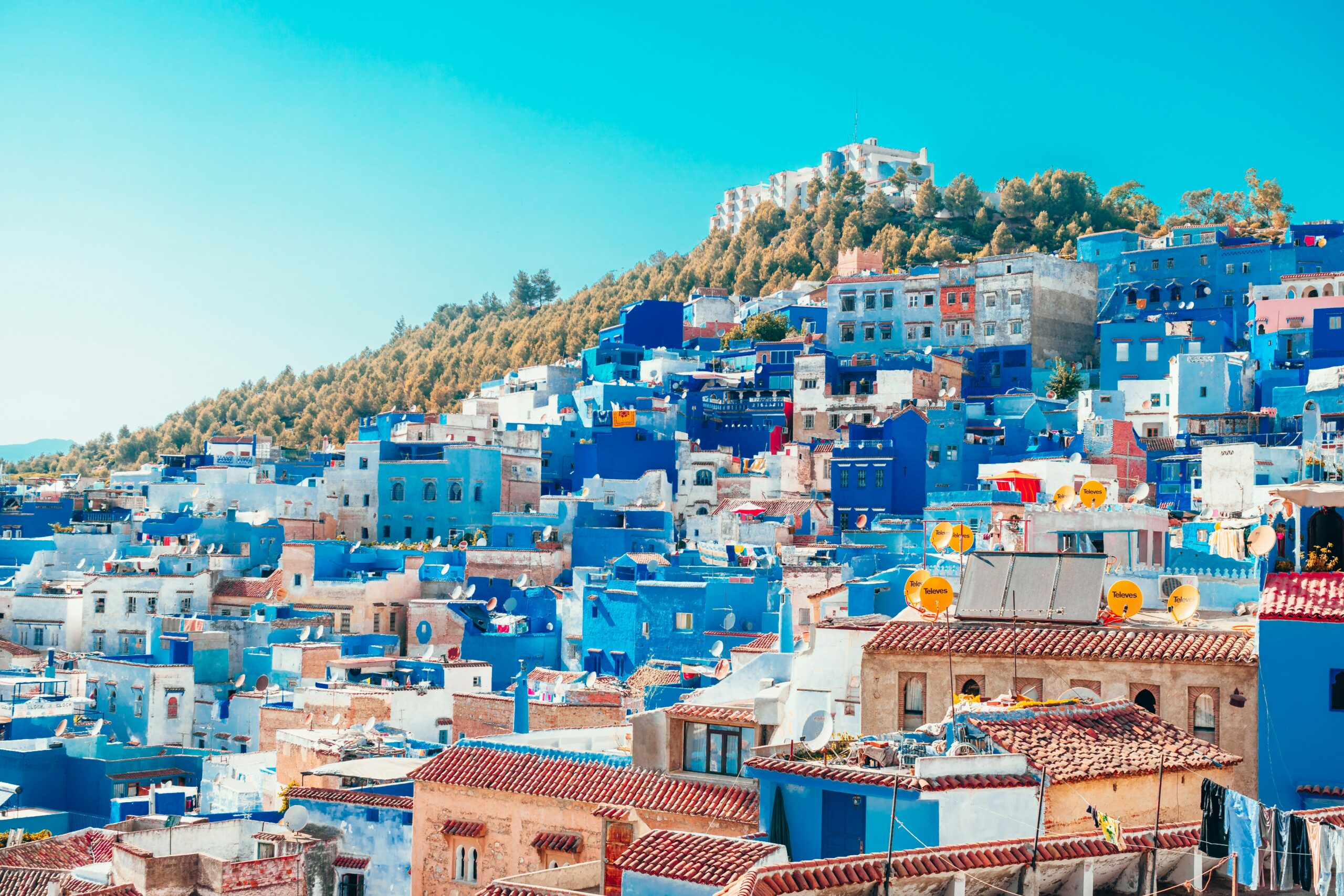
Many blue cities, like Chefchaouen, are nestled in the Rif Mountains. The urban design adapts to hilly terrains with:
Steep, winding alleys
Staircases connecting different levels of the medina
Terraced houses following the slope of the mountain
Panoramic viewpoints offering scenic vistas of the surrounding landscape
The integration of architecture with natural topography enhances the city’s charm and provides travelers with unique visual experiences.
Why Blue Cities Are Important for Moroccan Tourism
Morocco’s blue cities are more than just visually stunning—they play a crucial role in the country’s tourism industry. These cities attract visitors from around the world, boost local economies, and preserve cultural heritage, making them essential for sustainable tourism development.
International Popularity
Cities like Chefchaouen have gained worldwide recognition for their unique aesthetics and tranquil ambiance. They are featured in travel magazines, photography blogs, and social media platforms, making them iconic destinations for international tourists seeking picturesque experiences.
Cultural Tourism and Travel Experiences
Tourists visiting blue cities are not only attracted by their beauty but also by the opportunity to experience Moroccan culture firsthand. Travelers can:
Walk through traditional medinas
Participate in local festivals and cultural events
Explore artisanal markets
Learn about historical architecture
This focus on cultural tourism ensures that visitors gain a deeper understanding of Morocco’s heritage.
Economic Impact on Local Communities
Tourism in blue cities supports local economies by creating jobs, sustaining artisanal businesses, and encouraging investment in hospitality and services. Local residents benefit from the sale of crafts, traditional foods, guided tours, and accommodations, ensuring that tourism contributes to both cultural preservation and community development.
Travel Tips for Visiting Morocco’s Blue Cities
Visiting Morocco’s blue cities can be a magical experience, but knowing a few essential travel tips can make your trip smoother, more enjoyable, and culturally respectful.
Where to Stay
Accommodation options in blue cities include:
Riads: Traditional guesthouses with courtyards, providing authentic Moroccan experiences.
Hotels: Modern hotels with comfort and amenities for international travelers.
Guesthouses and Hostels: Budget-friendly options with opportunities to meet other travelers.
Staying in the medina allows easy access to the blue streets, local markets, and major attractions.
Photography Tips
Blue cities are extremely photogenic, but a few tips can enhance your experience:
Lighting: Early morning or late afternoon provides the best natural light.
Angles: Explore alleyways, staircases, and courtyards for unique perspectives.
Interaction: Capture candid shots of locals only with permission.
Gear: Lightweight cameras or smartphones are ideal for navigating narrow streets.
Photography in blue cities allows visitors to capture memories while appreciating the cultural and architectural beauty of the environment.
Morocco’s blue cities are more than just visually stunning destinations—they are vibrant cultural treasures that combine history, spirituality, architecture, and local traditions. From the iconic blue streets of Chefchaouen to the mountain landscapes, artisan crafts, and authentic cuisine, these cities offer travelers a unique and unforgettable experience.
Exploring the blue cities allows visitors to immerse themselves in Moroccan culture, connect with local communities, and capture some of the most picturesque scenes in the world. Whether you are a history enthusiast, photographer, or cultural traveler, the magic of Morocco’s blue cities promises memories that last a lifetime.
Plan your journey to Morocco’s blue cities today and discover the charm, tranquility, and vibrant heritage of these enchanting destinations. Don’t miss the chance to explore the alleys, enjoy local cuisine, and bring home a piece of Morocco’s unique cultural identity.