Moroccan Food Trails: A Culinary Journey Through Traditional Cities and Villages
Morocco is a country celebrated for its rich history, breathtaking landscapes, and vibrant traditions. But beyond its famous medinas, desert adventures, and coastal escapes, Morocco offers another unforgettable experience: its food. Across the country, food is much more than nourishment — it is culture, identity, and a way of life. For travelers looking to explore the heart of the country, Moroccan Food Trails provide one of the most authentic ways to discover Morocco.
From the busy streets of Tangier to the distant southern town of Lagouira, Moroccan Food Trails reveal a world of flavors shaped by centuries of Amazigh, Arab, Andalusian, African, and Mediterranean influences. Every city, village, and region tells its own story through food.
Following Moroccan Food Trails means discovering hidden recipes, meeting local families, exploring spice markets, and tasting dishes that have been passed down through generations. It is not just a journey for the stomach — it is a journey into Morocco’s soul.
Why Moroccan Food Trails Are More Than Just Cuisine
Food in Morocco is deeply tied to tradition, hospitality, and social life. This is why Moroccan Food Trails are far more than a culinary experience. They represent history, family values, and regional identities.
In Moroccan culture, meals are moments of connection. Families gather around one plate, sharing food and conversation. Bread is broken together as a symbol of unity, and tea is served as a gesture of welcome.
Through Moroccan Food Trails, travelers can understand the rhythm of daily life in Morocco. Food reflects the seasons, local ingredients, and even the geography of each region. Coastal cities favor seafood, mountain villages rely on herbs and olive oil, while desert regions use preserved ingredients and slow-cooking methods.
This makes Moroccan Food Trails one of the most immersive ways to experience Moroccan life.
Exploring Moroccan Food Trails Through Traditional Cities
One of the greatest advantages of Moroccan Food Trails is the diversity found across Moroccan cities. Each city has its own culinary personality.
In Tangier, food reflects strong Mediterranean and Spanish influences. Fresh seafood, grilled sardines, and fish tagines dominate local menus.
In Fez, often considered Morocco’s culinary capital, Moroccan Food Trails lead to rich dishes like pastilla, rfissa, and slow-cooked lamb with prunes. Fez is known for refined flavors and traditional recipes.
Marrakech offers a colorful food scene filled with street vendors, smoky grills, and famous dishes like tanjia. Its lively souks create one of the most exciting stops on Moroccan Food Trails.
Essaouira, by the Atlantic coast, is famous for grilled fish, oysters, and sea-inspired dishes. The city’s relaxed rhythm adds another layer to the experience.
Further south, Agadir and the Sahara regions introduce argan oil, Berber breads, and unique regional cooking styles.
Every stop on Moroccan Food Trails feels like discovering a new chapter of Moroccan culture.
The Role of Spices in Traditional Moroccan Food Culture
No discussion about Moroccan Food Trails is complete without talking about spices. They are the foundation of Moroccan cuisine.
Walking through Moroccan spice markets is an unforgettable sensory experience. The smell of cumin, saffron, paprika, cinnamon, ginger, turmeric, and ras el hanout fills the air.
Spices in Morocco are not used only for flavor — they tell stories. Each spice has a purpose, often linked to healing traditions, seasonal cooking, and family customs.
Cumin is used almost everywhere, from grilled meats to lentil soups. Saffron, one of the most valuable spices, adds luxury and depth to dishes. Cinnamon balances sweet and savory flavors, especially in tagines and pastilla.
Along Moroccan Food Trails, visitors quickly realize that mastering Moroccan cooking means understanding its spices.
These spices create the warmth, depth, and complexity that define Moroccan food.
A Taste of Hospitality on Moroccan Food Trails
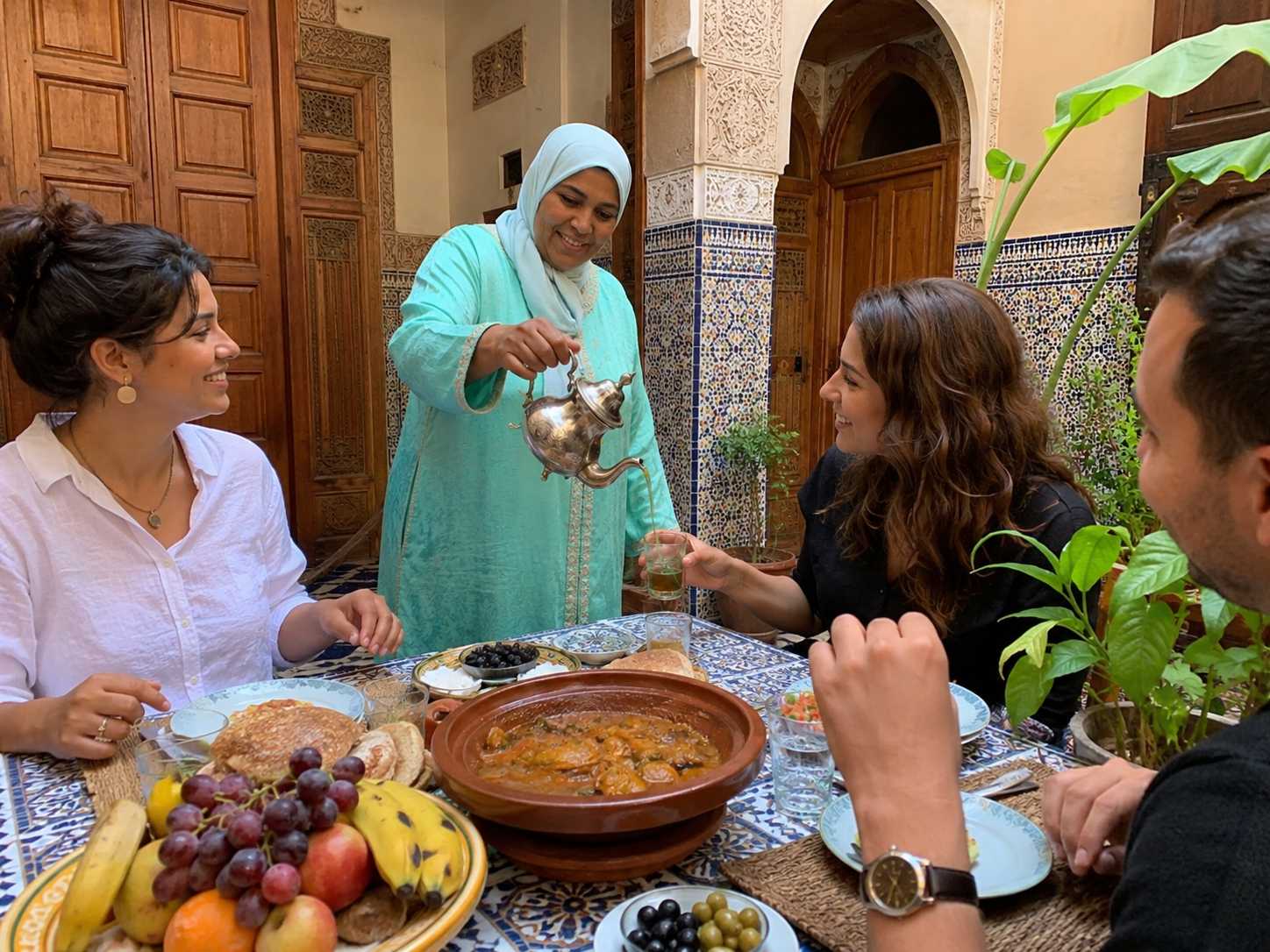
Hospitality is at the heart of every Moroccan Food Trail. In Morocco, food is one of the strongest ways to welcome someone.
Travelers often find themselves invited into homes for tea or meals. A simple lunch can turn into a memorable cultural exchange.
Mint tea is an essential symbol of hospitality. It is served everywhere — homes, cafés, markets, and villages. The process of preparing tea is almost ceremonial.
Meals are generous. Bread, olives, salads, tagines, and fruits are shared freely. Hosts often insist that guests eat more, a sign of respect and kindness.
On Moroccan Food Trails, these moments of hospitality often become the most meaningful memories. More than the dishes themselves, it is the people who make the journey unforgettable.
Why a Moroccan Food Trail Is the Best Way to Discover the Country
Many travelers visit Morocco for landscapes or historical monuments, but Moroccan Food Trails offer something deeper.
Food connects directly to people. It allows travelers to go beyond sightseeing and understand the daily life of locals.
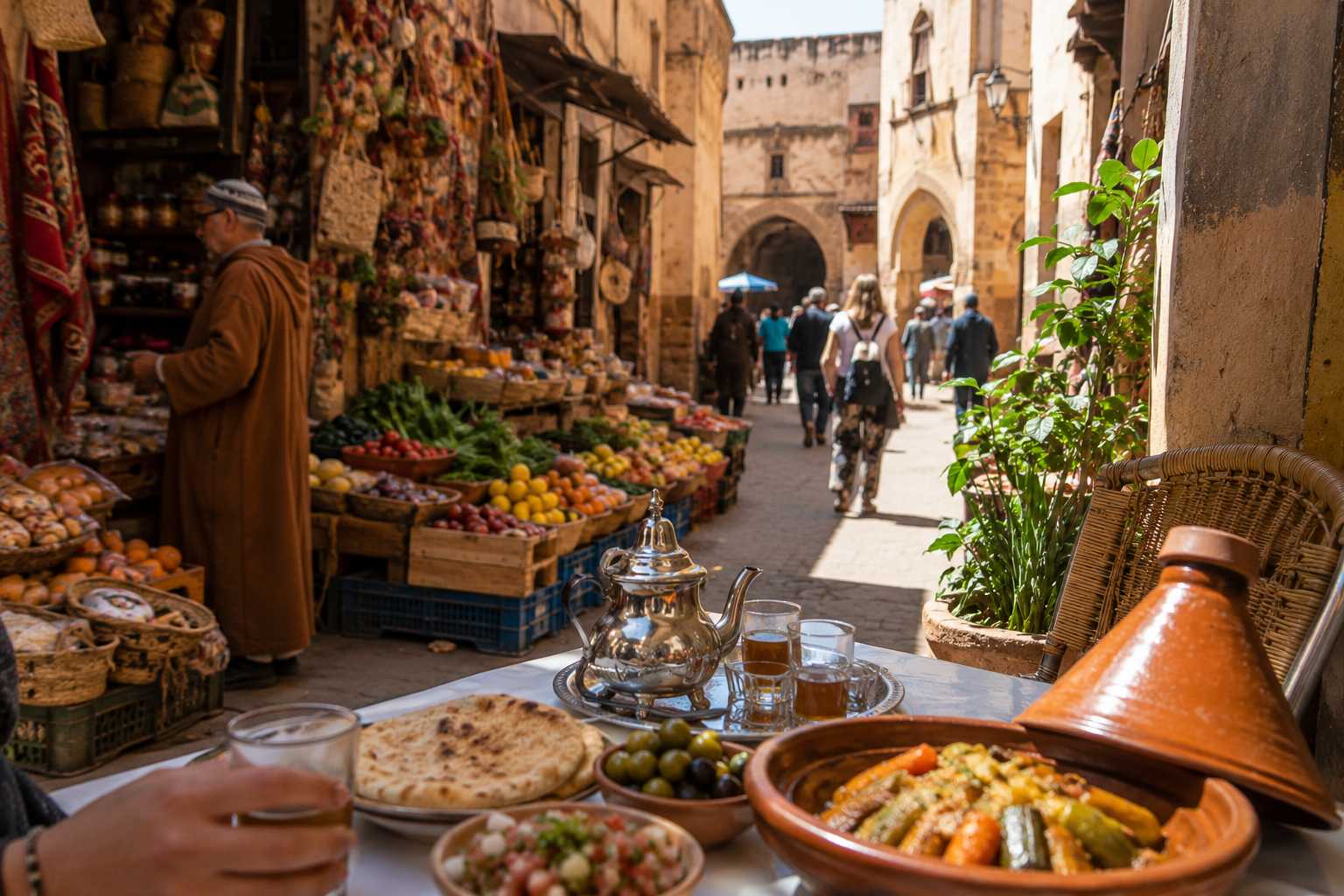
A Moroccan Food Trail naturally leads to hidden places: family-run bakeries, mountain farms, fishing ports, village markets, and old medinas.
It also encourages slow travel. Instead of rushing from one destination to another, travelers spend time tasting, learning, and connecting.
This slower rhythm makes travel more meaningful. Every meal becomes part of the journey.
Through Moroccan Food Trails, Morocco becomes more than a destination — it becomes an experience.
Hidden Culinary Gems on Morocco’s Food Trails
Beyond famous cities, Moroccan Food Trails reveal hidden culinary treasures in less touristic villages.
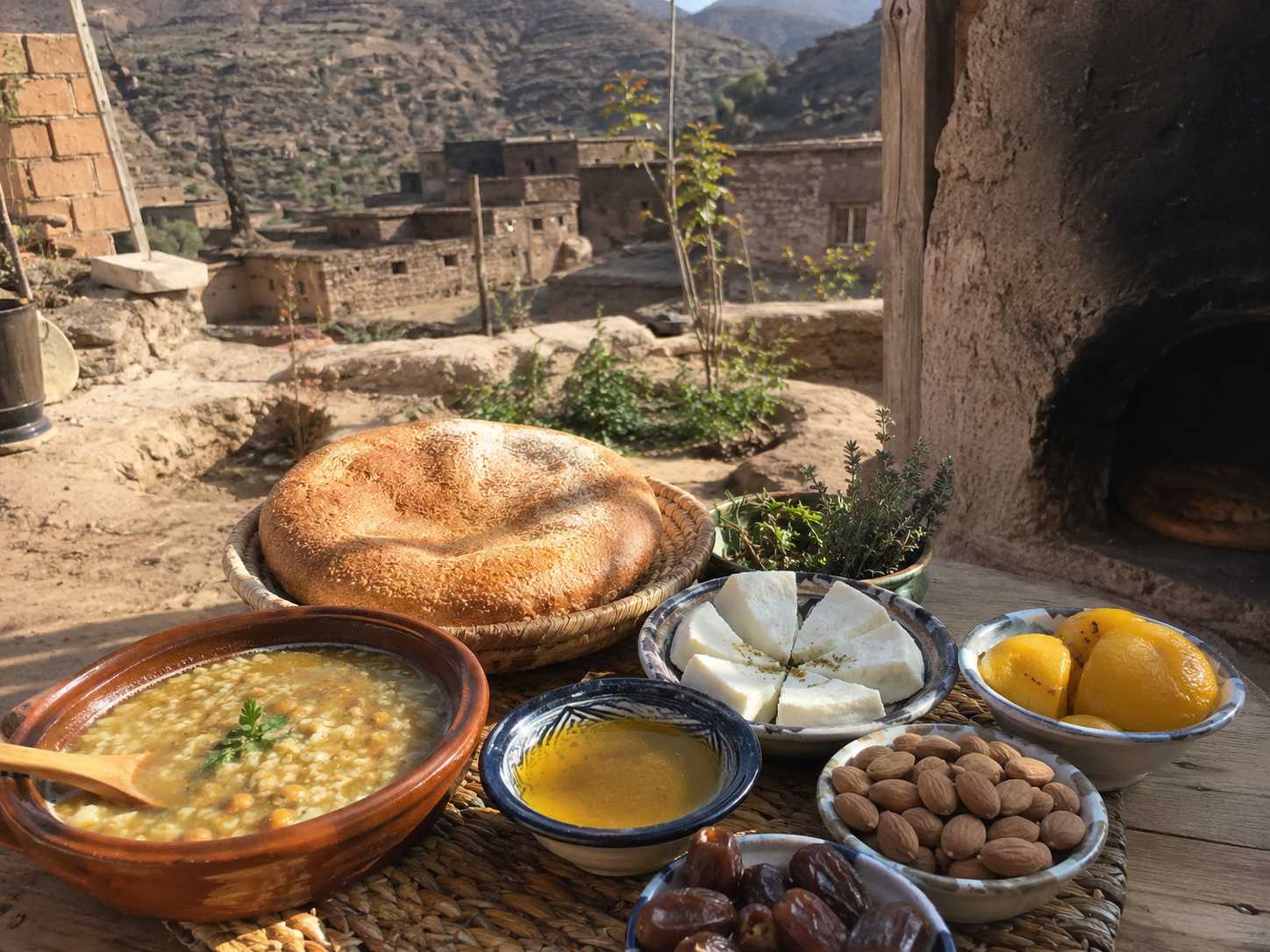
In the Rif Mountains, villages prepare traditional olive oil, homemade cheese, and fresh bread baked in clay ovens.
In the Atlas Mountains, Amazigh communities cook simple but powerful meals like barley soup, mountain herbs, and roasted meats.
In southern oasis villages, dates, almonds, and preserved lemons play a major role in local dishes.
These hidden gems show the purest side of Moroccan Food Trails — recipes untouched by commercial tourism and deeply rooted in tradition.
For food lovers, these lesser-known places often become the highlight of the journey.
Moroccan Food Trails: From Tangier to Lagouira’s Iconic Dishes
One of the most fascinating aspects of Moroccan Food Trails is how food changes from north to south.
In Tangier, iconic dishes include seafood tagine, bissara, and grilled sardines.
In Chefchaouen, visitors enjoy goat cheese, mountain honey, and fresh bread.
Fez offers rich classics like pigeon pastilla and harira.
Marrakech introduces tanjia and mechoui.
In the Atlas region, couscous remains the king of family meals.
Further south in Dakhla and Lagouira, seafood dominates — oysters, lobster, grilled fish, and unique Saharan preparations.
Traveling from Tangier to Lagouira through Moroccan Food Trails is like crossing multiple culinary worlds in one country.
The ingredients, techniques, and traditions evolve with the landscape
Morocco’s food is one of its greatest treasures, and Moroccan Food Trails offer the perfect way to discover it. More than just tasting dishes, they allow travelers to connect with history, people, and traditions.
From the spice-filled souks of Fez to the fishing villages of the Atlantic coast, from mountain homes to desert camps, every stop on Moroccan Food Trails reveals a new side of Morocco.
For travelers who want more than sightseeing, who seek authentic experiences and meaningful connections, following Moroccan Food Trails is one of the most rewarding journeys possible.
So, if you want to understand Morocco beyond its landscapes and monuments, why not start with its food — and let Moroccan Food Trails guide the way?
What are Moroccan Food Trails?
Moroccan Food Trails are culinary journeys through Morocco’s cities, villages, markets, and traditional homes. They allow travelers to discover local dishes, regional ingredients, spice culture, and food traditions that reflect Morocco’s history and identity.
Why are Moroccan Food Trails important?
Moroccan Food Trails are important because they show how food is connected to Moroccan culture, hospitality, family life, and regional identity. They help travelers understand Morocco beyond monuments and landscapes.
What cities are best for Moroccan Food Trails?
Some of the best cities for Moroccan Food Trails include Tangier, Fez, Marrakech, Essaouira, Agadir, Chefchaouen, Dakhla, and southern towns near Lagouira. Each destination offers different flavors, ingredients, and cooking traditions.
What traditional foods can travelers discover on Moroccan Food Trails?
Travelers can discover dishes such as tagine, couscous, pastilla, harira, rfissa, tanjia, grilled sardines, bissara, mechoui, Berber bread, mountain honey, olives, dates, and seafood dishes along the coast.
Are Moroccan Food Trails only about restaurants?
No, Moroccan Food Trails are not only about restaurants. They also include spice markets, family kitchens, village bakeries, fishing ports, mountain farms, souks, and traditional homes where food is prepared and shared in authentic ways.
What makes Moroccan Food Trails different from normal sightseeing?
Moroccan Food Trails create a deeper travel experience because they connect visitors directly with local people, traditions, and daily life. Instead of only seeing places, travelers taste regional stories, learn about ingredients, and experience Moroccan hospitality.