
A Food Lover’s Guide to Morocco: Regional Dishes You Must Try Beyond Tagine
Morocco is one of the world’s richest culinary destinations, where every region tells its own story through food. For many travelers, Moroccan cuisine starts and ends with tagine. While tagine remains iconic, it is only one part of a much larger culinary world. A true Moroccan Food Guide reveals a wide variety of regional dishes, street food traditions, seafood specialties, desserts, and ancient cooking methods that define the country’s identity.
From the Mediterranean north to the Atlantic coast, from mountain villages to southern deserts, this Moroccan Food Guide takes travelers on a journey through Morocco’s most authentic flavors. Every city, every village, and every family has recipes passed down for generations.
For food lovers, following a Moroccan Food Guide is one of the best ways to understand Morocco beyond its monuments and landscapes. Food here is culture, memory, and hospitality.
If you want to discover Morocco through taste, this Moroccan Food Guide will introduce you to the regional dishes you should not miss.
Exploring Regional Flavors Through a Moroccan Food Guide
One of the most fascinating parts of any Moroccan Food Guide is understanding how food changes across regions. Morocco’s geography has shaped its cuisine for centuries.
The north, influenced by Andalusian and Mediterranean traditions, offers lighter dishes with seafood, olives, and herbs. The center of the country is known for rich sauces, slow-cooked meats, and refined recipes. The south introduces stronger Amazigh influences with simpler but powerful flavors.
A complete Moroccan Food Guide shows that regional diversity is what makes Moroccan cuisine so special.
In Fez, dishes are often sophisticated and deeply layered. In Marrakech, flavors are bold and vibrant. Along the coast, seafood dominates daily life.
Traveling through these regions with a Moroccan Food Guide allows visitors to experience Morocco’s culinary identity in its full richness.
Each stop brings new ingredients, techniques, and traditions.
Northern Specialties in a Moroccan Food Guide: From Tangier to Tetouan
The northern part of the country is one of the most underrated culinary regions, and every Moroccan Food Guide should start here.
Tangier’s location between Europe and Africa has created a unique food culture. Seafood is central to local life. Grilled sardines, fish tagines, and calamari are common specialties.
A traditional Moroccan Food Guide in Tangier would also highlight bissara, a thick fava bean soup often eaten for breakfast with olive oil, cumin, and fresh bread.
Tetouan brings strong Andalusian influences into the Moroccan Food Guide. One of its most famous dishes is pastilla, a delicate pie made with pigeon or chicken, almonds, cinnamon, and crispy pastry layers.
Chefchaouen offers simpler but authentic mountain flavors. Goat cheese, wild honey, olive oil, and rustic bread are essential parts of the local Moroccan Food Guide.
Northern Morocco proves that the country’s culinary richness goes far beyond tagine.
Sweet Traditions and Desserts in a Moroccan Food Guide
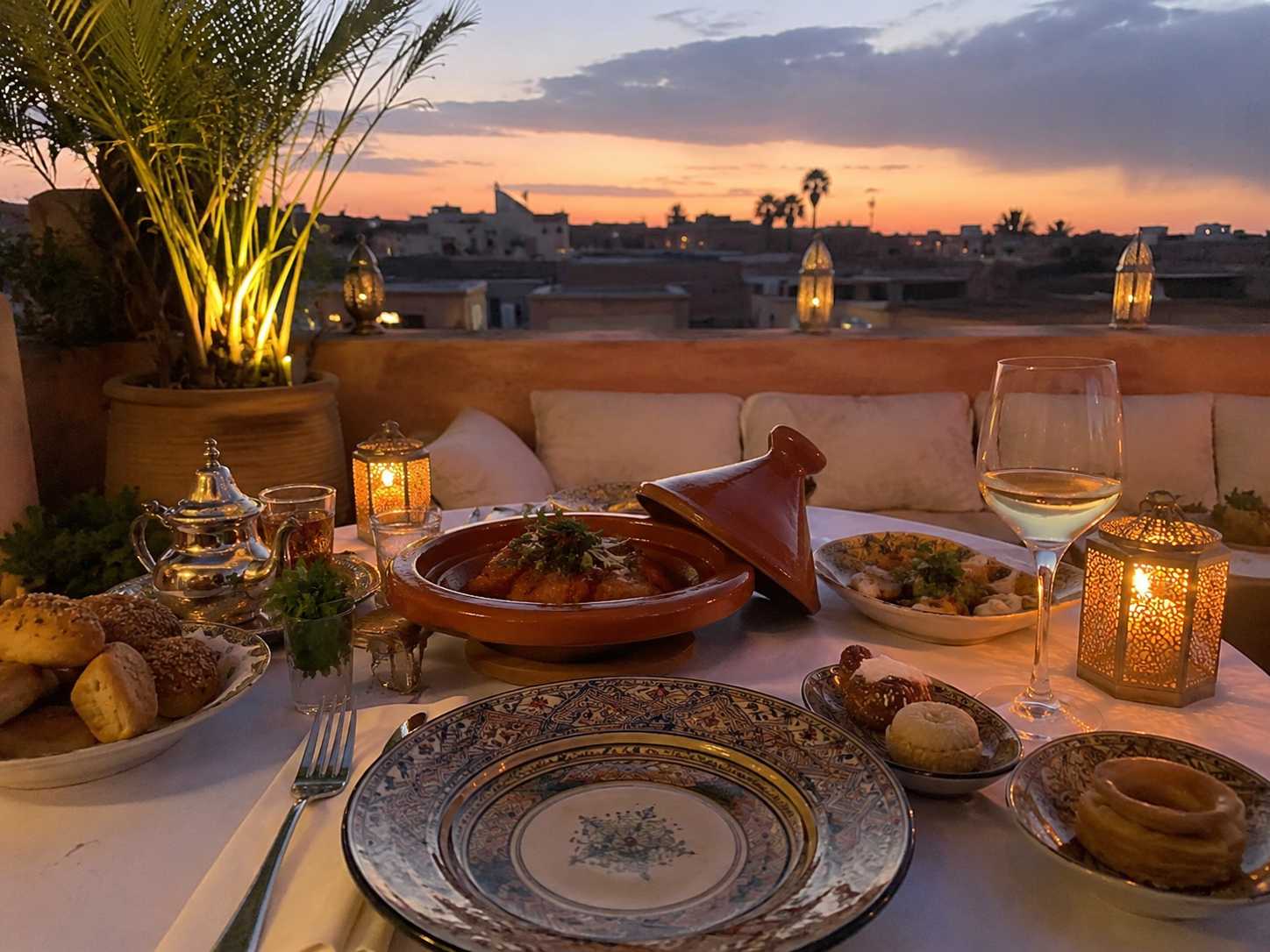
No Moroccan Food Guide is complete without desserts. Moroccan sweets are deeply connected to celebrations, tea rituals, and hospitality.
One of the most famous desserts in a Moroccan Food Guide is chebakia, a sesame-coated pastry covered in honey. It is especially popular during Ramadan.
Another essential dessert is sellou, a rich mix of roasted flour, almonds, sesame, and spices. It reflects the deep traditional side of Moroccan sweets.
A Moroccan Food Guide also includes kaab el ghzal, known as gazelle horns — delicate pastries filled with almond paste and orange blossom water.
In northern cities, sweet pastries often show Andalusian influence, while southern desserts use dates and almonds more heavily.
Mint tea always accompanies desserts in any Moroccan Food Guide, creating one of Morocco’s most symbolic food traditions.
For travelers, tasting Moroccan desserts offers another layer of cultural discovery.
The Role of Spices and Bread in a Moroccan Food Guide
Spices are the soul of every Moroccan Food Guide. They shape flavor, aroma, and the emotional warmth of Moroccan cuisine.
Walking through Moroccan spice markets is one of the most unforgettable experiences for food lovers.
The most important spices in a Moroccan Food Guide include:
- Cumin
- Saffron
- Turmeric
- Ginger
- Cinnamon
- Paprika
- Black pepper
- Ras el hanout
Each spice has a role. Cumin dominates savory dishes. Cinnamon balances sweet and salty combinations. Saffron adds luxury and depth.
Bread is equally important in every Moroccan Food Guide.
In Morocco, bread is more than food — it is a symbol of sharing.
Whether it is traditional round bread, msemen, or mountain barley bread, bread accompanies nearly every meal.
Together, spices and bread form the foundation of Moroccan food culture.
Seafood Experiences Along Morocco’s Coast in a Moroccan Food Guide
Morocco’s coastline stretches across both the Mediterranean and the Atlantic, making seafood essential in any Moroccan Food Guide.
Essaouira is one of the best seafood destinations. Visitors can choose fresh fish directly from the port and have it grilled on the spot.
A seafood-focused Moroccan Food Guide in Essaouira includes sea bass, calamari, oysters, and shrimp.
Agadir also offers exceptional seafood experiences. Fish markets there reveal the importance of the Atlantic in local cuisine.
Further south, Dakhla has become famous for oysters, one of the most luxurious stops in a Moroccan Food Guide.
In the Mediterranean north, Al Hoceima and Nador offer lighter seafood dishes influenced by Spanish and Mediterranean cooking styles.
Seafood adds freshness and regional diversity to the Moroccan culinary landscape.
The Rich Street Food Culture in a Moroccan Food Guide
Street food is one of the most exciting parts of any Moroccan Food Guide.
In Marrakech’s Jemaa el-Fnaa, street food transforms the square into a giant open-air kitchen every evening.
Travelers following a Moroccan Food Guide can taste:
- Snail soup
- Grilled kebabs
- Harira
- Msemen
- Sfenj
- Boiled eggs with cumin
- Brochettes
Street food reflects everyday Moroccan life. It is affordable, flavorful, and authentic.
In Fez, local vendors serve traditional lentil soups and fried pastries.
In Tangier, street food often includes seafood sandwiches and grilled sardines.
For many travelers, street food becomes the most memorable part of the Moroccan Food Guide because it feels spontaneous and deeply local.
It offers a direct connection to the city’s rhythm.

Why Following a Moroccan Food Guide Is the Best Way to Discover Morocco
Food is one of the strongest gateways into Moroccan culture. This is why following a Moroccan Food Guide is one of the most powerful ways to explore the country.
Unlike museums or monuments, food creates immediate connection. Sharing meals with locals opens conversations, traditions, and stories.
A Moroccan Food Guide naturally leads travelers into medinas, mountain villages, fishing ports, and family kitchens.
It encourages slow travel — taking time to taste, understand, and appreciate each region.
Every dish reflects geography, climate, and history.
Through a Moroccan Food Guide, travelers can understand Morocco’s Amazigh roots, Andalusian influence, African heritage, and Mediterranean spirit.
Food becomes a living map of the country.
Beyond Tagine: Regional Dishes You Must Try
While tagine remains iconic, a full Moroccan Food Guide includes many other essential dishes.
Rfissa – a comforting dish of chicken, lentils, and shredded msemen.
Tanjia – Marrakech’s famous slow-cooked meat specialty.
Harira – Morocco’s beloved soup.
Mechoui – whole roasted lamb, often served at celebrations.
Couscous – the king of Moroccan family meals.
Berkoukes – large-grain pasta served with vegetables and meat.
Seffa – steamed vermicelli with cinnamon and sugar.
These dishes complete the experience of any serious Moroccan Food Guide.
They prove Morocco’s cuisine is much larger and more diverse than many people imagine.
Morocco is a paradise for food lovers, and following a Moroccan Food Guide is one of the best ways to discover its true identity.
Beyond tagine, the country offers extraordinary regional dishes, rich street food traditions, coastal seafood, ancient desserts, and powerful spice combinations.
From Tangier to Dakhla, from mountain villages to Atlantic ports, every region adds something unique to the Moroccan Food Guide.
For travelers who want authentic experiences, food becomes the perfect path into Moroccan culture.
So if you are planning your next journey, why not let a Moroccan Food Guide lead the way one dish, one city, and one unforgettable flavor at a time?
What is a Moroccan Food Guide?
A Moroccan Food Guide is a culinary guide that helps travelers discover Morocco’s regional dishes, street food, seafood, desserts, spices, bread, and traditional cooking styles beyond the famous tagine.
What Moroccan dishes should travelers try besides tagine?
Travelers should try rfissa, tanjia, harira, mechoui, couscous, berkoukes, seffa, pastilla, bissara, grilled sardines, msemen, sfenj, and Moroccan seafood dishes.
What city in Morocco is best for food lovers?
Fez is often considered one of Morocco’s best cities for food lovers because of its refined traditional cuisine. Marrakech, Tangier, Essaouira, Tetouan, Agadir, and Dakhla are also excellent stops in any Moroccan Food Guide.
Is Moroccan street food worth trying?
Yes, Moroccan street food is worth trying because it reflects daily local life. Popular options include harira, msemen, sfenj, brochettes, grilled sardines, snail soup, boiled eggs with cumin, and local pastries.
5. What makes Moroccan cuisine unique?
Moroccan cuisine is unique because it combines Amazigh, Arab, Andalusian, African, and Mediterranean influences. Its use of spices, slow cooking, bread, seafood, sweets, and hospitality makes it rich and diverse.
Is Moroccan food only about tagine?
No, Moroccan food is much more than tagine. A complete Moroccan Food Guide includes regional dishes, street food, seafood, desserts, soups, breads, spices, and traditional meals from different parts of the country.