Asilah Arts Festival: Morocco’s Most Colorful Cultural Celebration
Asilah Arts Festival is one of Morocco’s most beloved cultural events, turning the small whitewashed town of Asilah on the Atlantic coast into a living, breathing open-air gallery every summer. For several weeks, local and international artists cover the medina’s walls with vivid murals, while poets, musicians, and craftsmen fill the narrow alleys with performances, workshops, and exhibitions. Unlike Morocco’s larger, more crowded festivals, this one keeps its intimate, artistic soul intact, making it a favorite stop for travelers who want culture without the chaos. Whether you are planning a dedicated art trip or simply passing through northern Morocco, understanding what this festival offers, when it happens, and how to experience it fully will help you make the most of your visit.
What Is the Asilah Arts Festival?
The Asilah Arts Festival, known locally as the Moussem Culturel International d’Assilah, is an annual international cultural gathering held in the coastal town of Asilah, roughly 45 minutes south of Tangier. At its core, the festival is a celebration of contemporary art, with muralists painting directly onto the whitewashed walls of the old medina, transforming ordinary streets into a rotating, ever-changing gallery. Beyond the murals, the event includes art exhibitions, poetry readings, theatre performances, concerts, and academic forums that bring together intellectuals, artists, and diplomats from Morocco and abroad.
What sets this festival apart from other cultural events in Morocco is its accessibility. There is no ticketed entrance and no single stage; instead, the entire medina becomes the venue, and visitors are free to wander, watch artists at work, and interact with the creative process in real time.
The festival is also unusual in how it blends generations and disciplines. Established painters work a few steps away from art students and first-time muralists, while poetry evenings and academic panels sit comfortably alongside street performances. This mix gives the event a layered feel: visitors interested purely in photography and street art can spend an entire day satisfied, while those drawn to deeper cultural discussion can attend the more formal talks and exhibitions held in parallel.
The History Behind the Asilah Arts Festival
The Asilah Arts Festival was first launched in 1978, founded by Mohamed Benaissa and Mohamed Melehi, two figures who wanted to use art and culture as tools for reviving a town that had fallen into economic decline after Moroccan independence. What began as a modest local initiative quickly grew into an internationally recognized cultural event, drawing artists, writers, and cultural figures from across Africa, Europe, and the Arab world.
Over the decades, the festival became closely tied to Asilah’s identity and economic revival. The mural-painting tradition, in particular, helped restore the medina’s crumbling buildings while giving the town a distinctive visual signature that continues to attract photographers and art lovers today. This history of using creativity as a form of urban renewal is part of what makes attending the festival feel meaningful rather than purely decorative.
Mohamed Benaissa, one of the festival’s co-founders, later became Morocco’s Minister of Foreign Affairs, and his continued involvement helped the event maintain international connections long after its first editions. Today, the festival is organized through the Asilah Cultural Foundation, which coordinates artist invitations, funding, and the wider cultural program each year, ensuring the event keeps evolving rather than repeating the same format annually.
When Does the Asilah Arts Festival Take Place?
The Asilah Arts Festival traditionally runs during the summer months, most commonly between July and August, though exact dates can shift slightly from year to year depending on the organizing foundation’s schedule. The event typically lasts between two and four weeks, giving visitors a wide window to plan a trip around it rather than needing to hit one exact date.
Because the festival unfolds gradually, with mural painting sessions, workshops, and evening events spread across its run, travelers do not need to worry about missing a single opening ceremony. Arriving at almost any point during the festival period usually means catching artists actively painting, along with ongoing cultural programming in the evenings. Checking the current year’s official dates before booking travel is recommended, since programming details are usually confirmed a few months in advance.
The summer timing is also worth factoring into a broader Morocco itinerary. July and August coincide with peak beach season along the Atlantic coast, so combining the festival with a few relaxed days in Asilah or nearby Tangier makes for a natural, unhurried trip rather than a rushed single-day visit.
Top Highlights of the Asilah Arts Festival
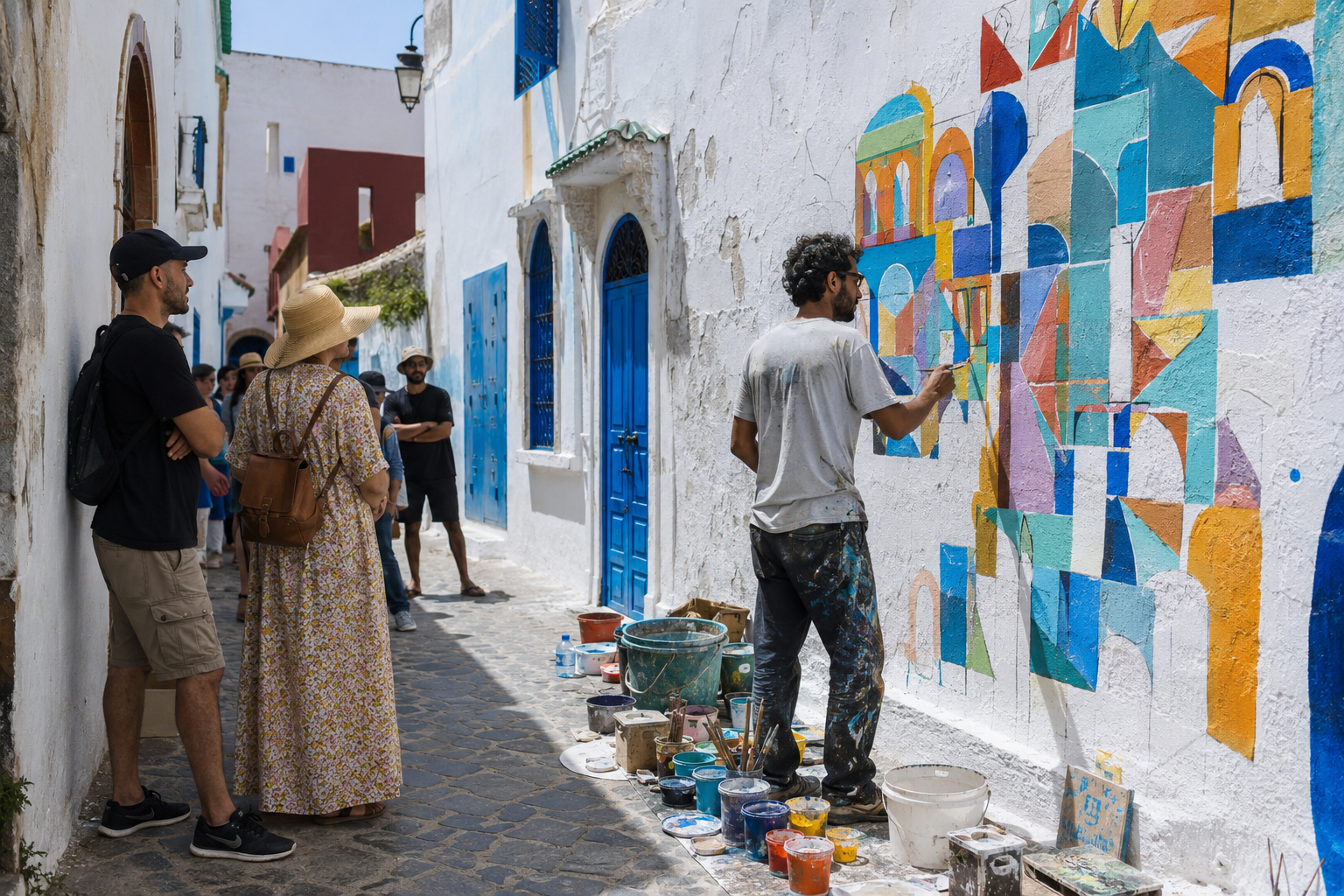
The centerpiece of the Asilah Arts Festival is undoubtedly the mural painting itself. Watching artists work directly on the medina’s walls, often using bold geometric patterns, Amazigh-inspired motifs, or abstract designs, offers a rare, unfiltered look at the creative process most galleries never show visitors.
Live Mural Painting
Streets throughout the old town become temporary studios, with artists painting from morning until late afternoon while curious visitors watch and chat with them along the way.
Art Exhibitions and Galleries
Several venues across Asilah host formal exhibitions during the festival, showcasing paintings, sculpture, and photography from participating artists in a more traditional gallery setting.
Music and Poetry Evenings
As the sun sets, the medina’s squares fill with music performances and poetry readings, often blending Moroccan traditions with contemporary influences.
Cultural Forums
The festival also hosts panel discussions and forums on topics ranging from art and identity to Mediterranean politics, drawing thinkers and public figures from across the region.
Where to See the Best Murals
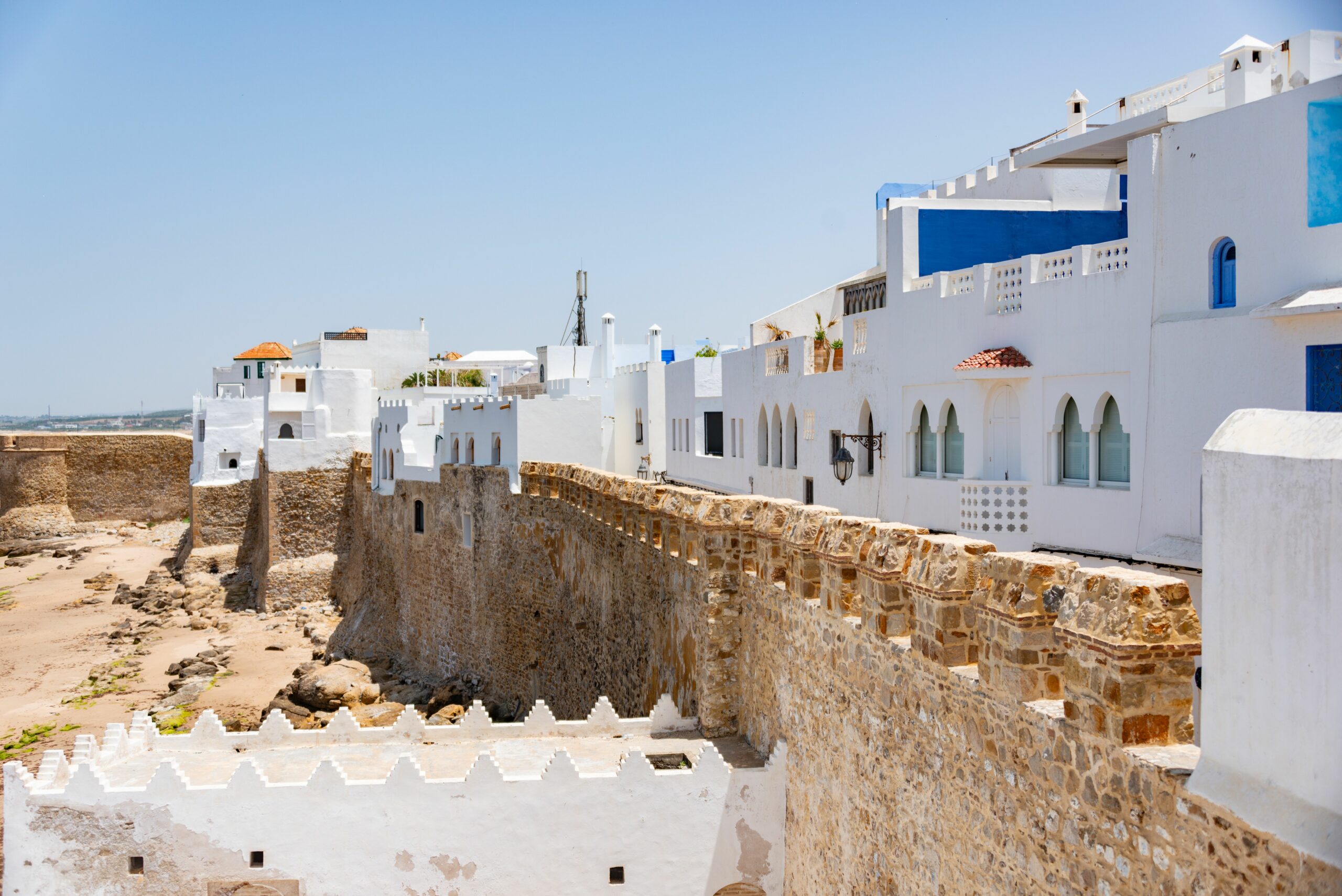
While new murals appear throughout the medina during the festival, some of the most photographed pieces from past editions remain visible year-round near Bab Kasaba and along the ramparts overlooking the Atlantic. Wandering the streets closest to the old Portuguese walls tends to reward visitors with the highest concentration of large-scale works, making that stretch of the medina a good starting point before exploring further inland.
How to Experience the Asilah Arts Festival Like a Local
To get the most out of the Asilah Arts Festival, it helps to slow down rather than treat it like a checklist of sights. Start early in the morning, when artists begin their work and the light in the medina is at its softest for photography. Spend time simply walking through the narrow, whitewashed streets rather than following a fixed route, since much of the charm comes from stumbling on murals in progress.
Striking up conversation with artists is welcomed and often leads to the best stories of the trip; many are happy to explain their inspiration or technique. In the evenings, follow the sound of music toward the main squares, where locals and visitors gather together, and consider pairing your festival day with fresh seafood at one of the small restaurants along the coast, a local tradition given Asilah’s fishing-town roots.
Locals also treat the festival as a genuine community event rather than a purely touristic show, so visitors who arrive with patience and curiosity tend to get more out of it than those trying to rush through a checklist. Sitting at a café near the ramparts for an hour, watching the town’s daily rhythm continue around the festival activity, often reveals more about Asilah’s character than any single scheduled event.

Ready to Explore Morocco?
Discover our collection of carefully designed private tours and experience Morocco’s most iconic destinations, breathtaking landscapes, and authentic cultural treasures.
Best Things to Do Near the Asilah Arts Festival
Asilah’s location on Morocco’s northern coast makes it easy to combine the festival with other nearby destinations. Tangier, just a short drive north, offers its own rich history, medina, and coastal viewpoints, and pairs naturally with an Asilah day trip. Travelers interested in the region’s cinematic history may also enjoy exploring
sites connected to major film productions shot around Tangier, such as the Spectre filming locations in Tangier, which sit close enough to combine with an Asilah festival day.
Further afield, the blue-washed streets of Chefchaouen make for a striking contrast to Asilah’s coastal whitewash, and many travelers extend their northern Morocco itinerary to include both towns. For those who want the logistics handled rather than arranging transport themselves, guided day trips from Tangier are widely available and typically include round-trip transport, a local guide, and free time to explore the festival independently.
You can browse day tours from Tangier to see current options for combining Asilah with other northern Morocco highlights, or check the Chefchaouen day trip for a two-town itinerary.
Practical Tips for Visiting the Asilah Arts Festival
Summer temperatures on the Atlantic coast are milder than inland Morocco, but the medina’s narrow streets still get warm during the day, so light clothing, sun protection, and comfortable walking shoes are worth packing. Since the festival draws both Moroccan and international visitors, accommodation in Asilah itself can fill up during peak festival weeks, so booking ahead or basing yourself in Tangier and visiting for the day is a practical alternative.
Photography is generally welcomed throughout the festival, but it is courteous to ask before photographing artists closely or including them in frame. Cash is useful for small purchases from local vendors and artists selling smaller pieces, as card payment is not always available in the medina’s smaller stalls. Finally, because the festival calendar can shift by a week or two year to year, confirming exact dates shortly before travel helps avoid arriving before or after the main events.
Evenings can bring a light sea breeze even in peak summer, so packing a light layer is worth it for late-night music and poetry sessions. And since much of the medina is pedestrian-only with uneven, narrow lanes, comfortable footwear will matter far more here than in more paved, modern parts of Morocco.
Frequently Asked Questions About the Asilah Arts Festival
What is the Asilah Arts Festival?
The Asilah Arts Festival is an annual international cultural event held in Asilah, Morocco, featuring live mural painting on the medina’s walls alongside art exhibitions, music, poetry, and cultural forums.
When does the Asilah Arts Festival take place each year?
The festival is typically held in the summer, usually between July and August, and runs for two to four weeks. Exact dates vary slightly by year, so checking closer to your travel date is recommended.
Where is Asilah located in Morocco?
Asilah is a coastal town on Morocco’s Atlantic coast, located about 45 minutes south of Tangier and roughly two hours from Rabat, making it an easy day trip from either city.
Is the Asilah Arts Festival free to attend?
Yes, most of the festival is free and open to the public. The murals, street performances, and much of the outdoor programming can be enjoyed without any ticket, though some evening events or forums may have limited seating.
How do I get to Asilah from Tangier or Fez?
From Tangier, Asilah is reachable by train, grand taxi, or a short organized day trip, taking around 45 minutes to an hour. From Fez, the journey takes roughly four to five hours by car or train, making it more practical as an overnight stop or a stretch of a longer northern Morocco itinerary.
The Asilah Arts Festival remains one of the most rewarding cultural experiences in Morocco precisely because it resists spectacle for spectacle’s sake. It is a town-wide, walkable celebration of art, music, and ideas, rooted in a genuine history of using creativity to renew a community. Whether you spend a single afternoon wandering past half-finished murals or plan an entire trip around the festival’s summer run, Asilah offers a side of Morocco that feels personal, artistic, and refreshingly uncrowded.