Imilchil Marriage Festival: Morocco’s Legendary Berber Love Story
Imilchil Marriage Festival is one of Morocco’s most extraordinary cultural gatherings, held each year high in the Atlas Mountains among the Aït Haddidou Berber tribe. Part souk, part celebration, part living legend, this three-day event draws thousands of visitors who come to witness a tradition unlike anything else in North Africa: a communal marriage market rooted in a centuries-old love story. For travelers seeking authentic Amazigh culture beyond the usual Marrakech and Fes circuit, the Imilchil Marriage Festival offers a rare window into rural Berber life, traditional dress, music, and matchmaking rituals that have survived largely unchanged for generations. This guide covers everything you need to know before planning your trip.
What Is the Imilchil Marriage Festival?
The Imilchil Marriage Festival, known locally as Moussem Imilchil, is an annual gathering of the Aït Haddidou people in the small town of Imilchil, located in Morocco’s High Atlas Mountains between Er-Rachidia and Midelt. Historically, the festival combined a large regional souk, where tribes traded livestock, wool, and produce, with a matchmaking custom that allowed unmarried young men and women from different clans to meet and choose a spouse. While the modern event has evolved into more of a cultural and touristic celebration, the spirit of the original moussem remains intact: colorful traditional dress, Amazigh music, dancing, and a genuine sense of community pride.
Today, the Imilchil Marriage Festival is recognized as one of Morocco’s most important cultural moussems, attracting anthropologists, photographers, and travelers from around the world who want to experience Berber heritage in its most authentic setting.
Unlike festivals built primarily around performance, the Imilchil Marriage Festival grew organically out of practical necessity. Aït Haddidou families are semi-nomadic, moving with their herds between high summer pastures and lower winter settlements, which historically made it difficult for young people from scattered communities to meet outside a handful of annual gatherings. The September moussem, timed to coincide with the descent from the mountains, became the natural moment for families, traders, and prospective couples to come together in one place. That practical origin is part of why the festival still feels rooted in daily Aït Haddidou life rather than staged for outside visitors.
The Aït Haddidou Tribe and the Imilchil Region
The Aït Haddidou are a Amazigh (Berber) tribal confederation native to the eastern High Atlas, known for their distinct dialect, weaving traditions, and pastoral lifestyle. The Imilchil region they inhabit is characterized by high plateaus, cedar and juniper forests, and dramatic lake landscapes shaped by volcanic activity. Because the area sees relatively few foreign visitors outside of festival season, the Imilchil Marriage Festival remains one of the most reliable windows into how this specific Amazigh community lives, dresses, and celebrates throughout the year.
The Legend Behind the Imilchil Marriage Festival
Every great festival has a story, and the legend behind the Imilchil Marriage Festival is one of Morocco’s most beloved tales of forbidden love. According to local oral tradition, a young man named Isli and a young woman named Tislit belonged to two rival Aït Haddidou clans who forbade their union. Heartbroken and unable to be together, the couple is said to have wept so intensely that their tears formed two separate lakes in the surrounding mountains. Unable to reunite in life, their families later agreed to hold an annual gathering where young people from different clans could freely choose their own partners, so that no other couple would suffer the same fate.
Isli and Tislit Lakes: Where the Legend Lives On
Lake Isli and Lake Tislit, located just a short drive from Imilchil village, remain popular stops for visitors attending the festival. Many travelers combine a festival visit with a scenic stop at these two lakes, and pair the excursion with a broader Atlas Mountains tour through the region’s Berber villages and valleys.
When and Where the Imilchil Marriage Festival Takes Place
The Imilchil Marriage Festival is held annually in September, typically after the harvest and just before the harsher mountain winter sets in, when the Aït Haddidou families descend from their summer pastures. Exact dates shift slightly from year to year based on the agricultural calendar and local authorities’ announcements, so it’s worth confirming the current schedule before booking travel.
The festival takes place in and around Imilchil, a small town in Morocco’s Middle Atlas / High Atlas transition zone, in Errachidia Province. It sits roughly midway between Er-Rachidia and Midelt, at an altitude of around 2,200 meters, which means the mountain air can turn cold quickly, even in September.
- Region: High Atlas Mountains, Errachidia Province
- Nearest larger towns: Er-Rachidia and Midelt
- Typical timing: September (dates vary yearly)
- Duration: Usually 3 days of festivities
Traditions and Rituals of the Imilchil Marriage Festival
What makes the Imilchil Marriage Festival so compelling is the layering of everyday rural commerce with deeply symbolic ritual. The event unfolds as both a working souk and a stage for courtship customs passed down through generations.
Traditional Dress and Jewelry
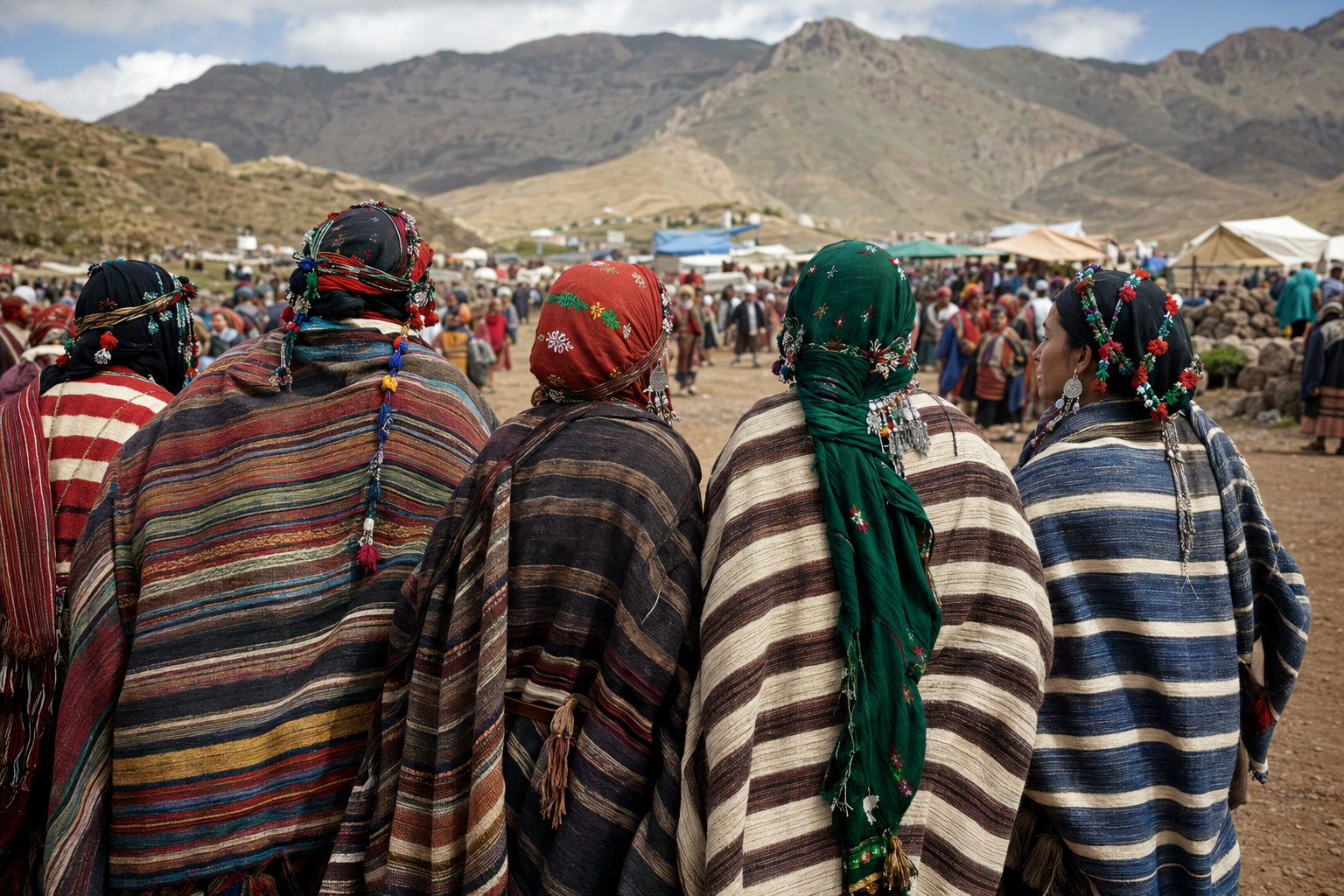
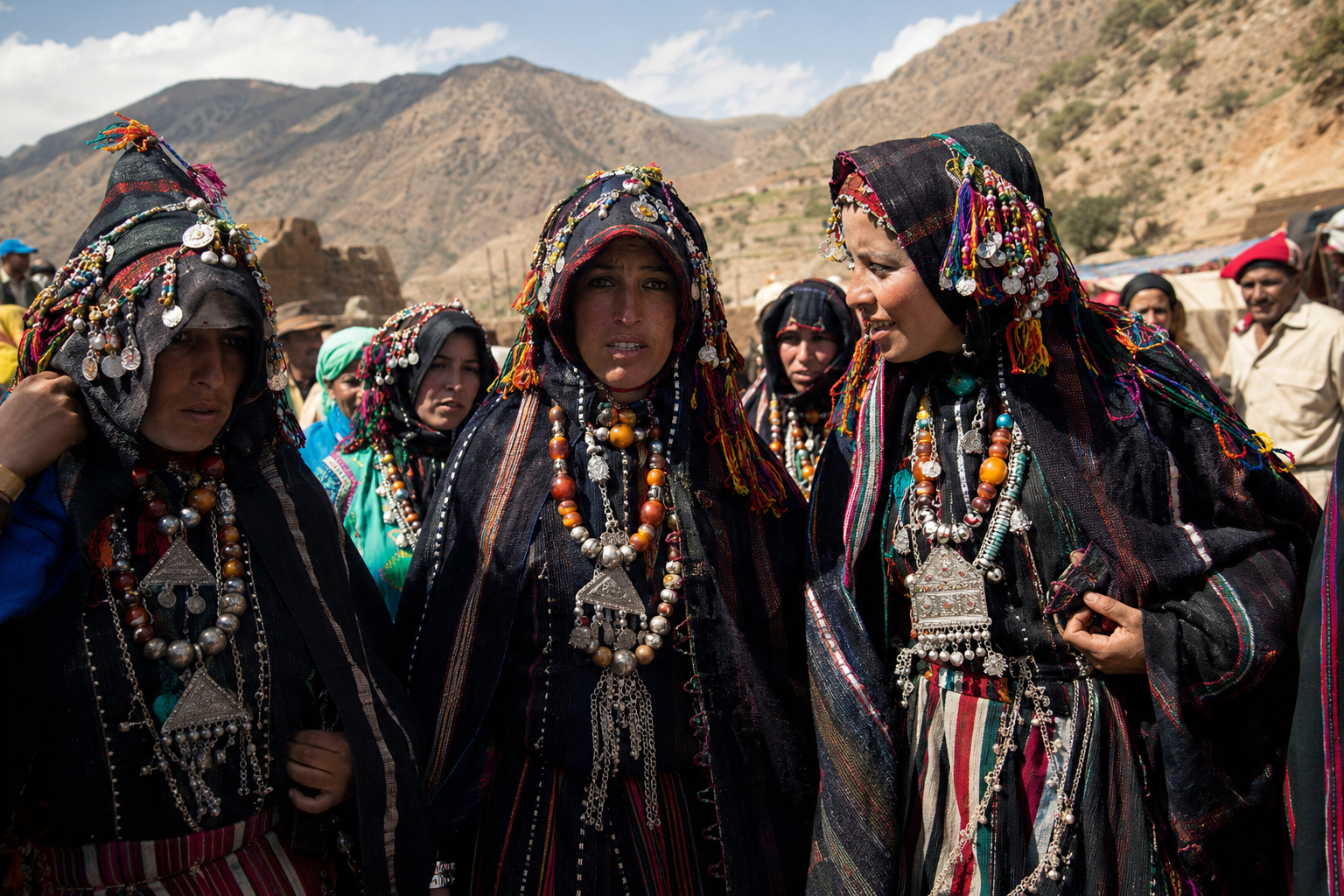
Aït Haddidou women wear striped wool cloaks, elaborate silver jewelry, and distinctive headpieces that signal their marital status; married women, widows, and unmarried women each wear recognizably different styles. These details, largely unknown outside the region, are part of what makes the Imilchil Marriage Festival such a rich subject for cultural photography and storytelling.
The Marriage Market
In its traditional form, the gathering allowed young men and women to walk among the crowds, exchange glances or brief conversation, and signal interest. While the ceremonial matchmaking aspect is now more symbolic than it once was — most marriages in the region are arranged through family networks — the imagery and customs of the moussem are preserved and performed each year as a proud expression of Amazigh identity. Unmarried women traditionally signal their status through specific jewelry and headscarves, while conversations between prospective couples are often brief, public, and closely observed by family members, reflecting the community-oriented nature of courtship in this culture.
Music, Dance, and the Souk
Alongside the courtship traditions, the festival features Ahidous, a circular Berber dance accompanied by drums and chanting, along with a bustling souk selling livestock, carpets, spices, and handicrafts. Visitors can wander between market stalls and open-air performances, making the Imilchil Marriage Festival as much a sensory experience as a cultural one. The rhythmic clapping and call-and-response singing of Ahidous performances often continue late into the evening, with lines of dancers linking arms around open fires as temperatures drop in the mountain air.
The livestock souk itself remains a serious economic event for local families, not simply a backdrop for visitors. Sheep, goats, and mules change hands alongside handwoven Aït Haddidou carpets, prized for their bold geometric patterns, and stalls of dried herbs, saffron, and mountain honey. Wandering through this working market gives visitors a far more grounded sense of daily Berber economic life than the more tourist-oriented souks found in cities like Marrakech or Fes.
Why the Imilchil Marriage Festival Belongs on Your Morocco Itinerary
Most travelers to Morocco experience Berber culture through curated stops on standard tour routes. The Imilchil Marriage Festival offers something different: a living tradition, celebrated by the community for itself rather than staged for visitors. For travelers interested in Morocco beyond the imperial cities, this remote High Atlas moussem delivers an unfiltered look at Amazigh identity, dress, music, and social customs.
The festival also pairs naturally with a wider Middle Atlas or desert tour from Merzouga, since the surrounding region connects toward the pre-Sahara routes many travelers already have on their Morocco itinerary. Combining the moussem with a broader Berber culture experience gives visitors a fuller picture of Morocco’s mountain communities, not just its cities and coastline.
Practical Tips for Visiting the Imilchil Marriage Festival
Imilchil is remote, and the festival draws large crowds to a small mountain town with limited infrastructure, so a little planning goes a long way.
Getting There
The most reliable way to reach the Imilchil Marriage Festival is by private vehicle or organized tour departing from Er-Rachidia, Midelt, or as an extension of a longer Atlas Mountains and desert circuit. Roads into Imilchil wind through mountain passes and can be affected by weather, so a driver familiar with the region is strongly recommended over self-driving.
What to Pack
- Warm layers — nights and early mornings at 2,200 meters are cold even in September
- Comfortable walking shoes for uneven, dusty ground
- Cash, since rural areas have limited card or ATM access
- A camera, but always ask permission before photographing people
Respecting Local Customs
Dress modestly, ask before photographing individuals up close, and approach the marriage-related customs with cultural sensitivity rather than as a spectacle. The Aït Haddidou community welcomes respectful visitors who engage with the Imilchil Marriage Festival as a genuine cultural event rather than a performance staged for tourists.
Where to Stay Near the Imilchil Marriage Festival
Accommodation directly in Imilchil is limited and fills quickly during festival dates, so many travelers base themselves in Er-Rachidia, Midelt, or a nearby guesthouse and travel in for the day, or book well in advance if planning to stay overnight in town. Guided tours typically handle these logistics as part of a wider Middle Atlas or desert itinerary, which removes much of the uncertainty around lodging and road conditions during festival season.
Ready to Explore Morocco?
Discover our collection of carefully designed private tours and experience Morocco’s most iconic destinations, breathtaking landscapes, and authentic cultural treasures.
The Imilchil Marriage Festival and Morocco’s Wider Berber Heritage
The Imilchil Marriage Festival is one of several important moussems across Morocco, alongside events like the Rose Festival in the Dades Valley and regional Amazigh gatherings throughout the Atlas. Travelers building a longer Morocco trip often combine a festival visit with stops in the Dades and Todra Gorges, the Sahara dunes near Merzouga, and Middle Atlas cedar forests, weaving several Berber cultural experiences into one journey rather than treating the festival as an isolated stop.
For a deeper dive into the customs, dress, and daily life encountered here, see our related guide on Berber culture and traditions in Morocco and browse our tailor-made Morocco tours to build a High Atlas itinerary around the festival dates.
Frequently Asked Questions About the Imilchil Marriage Festival
Where exactly is the Imilchil Marriage Festival held?
It takes place in Imilchil, a small mountain town in Morocco’s High Atlas Mountains, located between Er-Rachidia and Midelt, at an elevation of roughly 2,200 meters.
Is the Imilchil Marriage Festival still a real marriage market today?
The original matchmaking custom has largely become symbolic. Most marriages in the region today are arranged through family networks beforehand, and the festival now functions primarily as a cultural celebration, souk, and showcase of Aït Haddidou traditions.
How do I get to the Imilchil Marriage Festival from Marrakech or Fes?
There is no direct public transport, so most visitors join an organized tour or hire a private driver from Er-Rachidia, Midelt, or as part of a longer Atlas Mountains and desert circuit from Marrakech or Fes.
What should I wear to the Imilchil Marriage Festival?
Pack warm, modest layers — mountain evenings are cold even in September — along with comfortable walking shoes for uneven ground and cash for local vendors, since rural card access is limited.
The Imilchil Marriage Festival is far more than a tourist attraction — it’s a living expression of Aït Haddidou identity, shaped by a legend of star-crossed love and sustained by a community that continues to gather, dance, and trade in the same mountains their ancestors did. For travelers willing to venture off Morocco’s main tourist trail, this High Atlas moussem offers one of the country’s most memorable and meaningful cultural experiences. Plan around the September dates, travel with a knowledgeable guide, and come prepared to witness a tradition that has captivated visitors for generations.