Best Hiking Destinations in Morocco for Adventure Lovers
Morocco is a country of contrasts, where mountains, deserts, valleys, and coastlines create endless opportunities for adventure. While many travelers visit Morocco for its imperial cities, colorful souks, and Sahara experiences, an increasing number are discovering the incredible beauty of Hiking in Morocco.
For adventure lovers, Hiking in Morocco offers one of the most diverse outdoor experiences in North Africa. From the dramatic peaks of the Atlas Mountains to the hidden trails of the Rif Mountains, and from green valleys to desert canyons, the country provides unforgettable routes for every hiking level.
What makes Hiking in Morocco unique is not only the landscapes but also the cultural richness along the way. Hikers can explore remote villages, meet local Amazigh communities, and enjoy traditional hospitality while walking through some of the country’s most breathtaking natural settings.
For those looking for authentic adventure, Hiking in Morocco is one of the best ways to experience the country beyond its tourist attractions.
Hiking in Morocco’s Rif Mountains: Hidden Trails and Scenic Views
The Rif Mountains in northern Morocco remain one of the country’s most underrated hiking regions. For travelers interested in Hiking in Morocco, this area offers peaceful trails, green forests, and spectacular views over the Mediterranean Sea.
Unlike the busier Atlas Mountains, Hiking in Morocco’s Rif Mountains feels more authentic and less crowded. The trails around Chefchaouen and the northeastern regions reveal hidden valleys, natural springs, and traditional villages.
One of the most beautiful aspects of Hiking in Morocco in the Rif is the diversity of landscapes. In just a few hours, hikers can move from mountain forests to panoramic sea views.
The Rif Mountains are ideal for moderate hikers looking for scenic adventures and cultural immersion.
Why Hiking in Morocco Is a Unique Adventure Experience
There are many reasons why Hiking in Morocco stands out as a special adventure experience.
First, Morocco offers extraordinary geographical diversity. Few countries allow travelers to hike snowy mountain peaks, deep green valleys, rocky canyons, and desert dunes within the same journey.
Second, Hiking in Morocco combines nature with culture. Unlike hiking in isolated natural parks, hiking routes in Morocco often pass through villages where people still live according to ancient traditions.
This gives travelers a rare opportunity to experience local life while exploring.
Another reason why Hiking in Morocco is unique is the country’s climate. Different regions offer hiking opportunities almost all year round.
This combination of adventure, diversity, and cultural connection makes Hiking in Morocco truly exceptional.
Best Hiking Destinations in Morocco for Beginners and Experts
One of the strengths of Hiking in Morocco is that it offers routes for all experience levels.
For beginners, the valleys near Imlil in the High Atlas provide easy and scenic walks. These routes are perfect for discovering mountain life without difficult climbs.
For intermediate hikers, Todra Gorge offers rocky paths and incredible canyon views. It is one of the most popular spots for Hiking in Morocco.
Experienced hikers often choose Mount Toubkal, the highest peak in North Africa. Reaching the summit is considered one of the greatest achievements for adventure lovers interested in Hiking in Morocco.
Other excellent destinations include:
- Aït Bouguemez Valley
- Akchour waterfalls
- Dades Valley
- Jbel Saghro
- Ouzoud region
These places prove that Hiking in Morocco can adapt to every traveler.
Local Villages and Cultural Encounters While Hiking in Morocco
One of the most memorable aspects of Hiking in Morocco is meeting local communities.
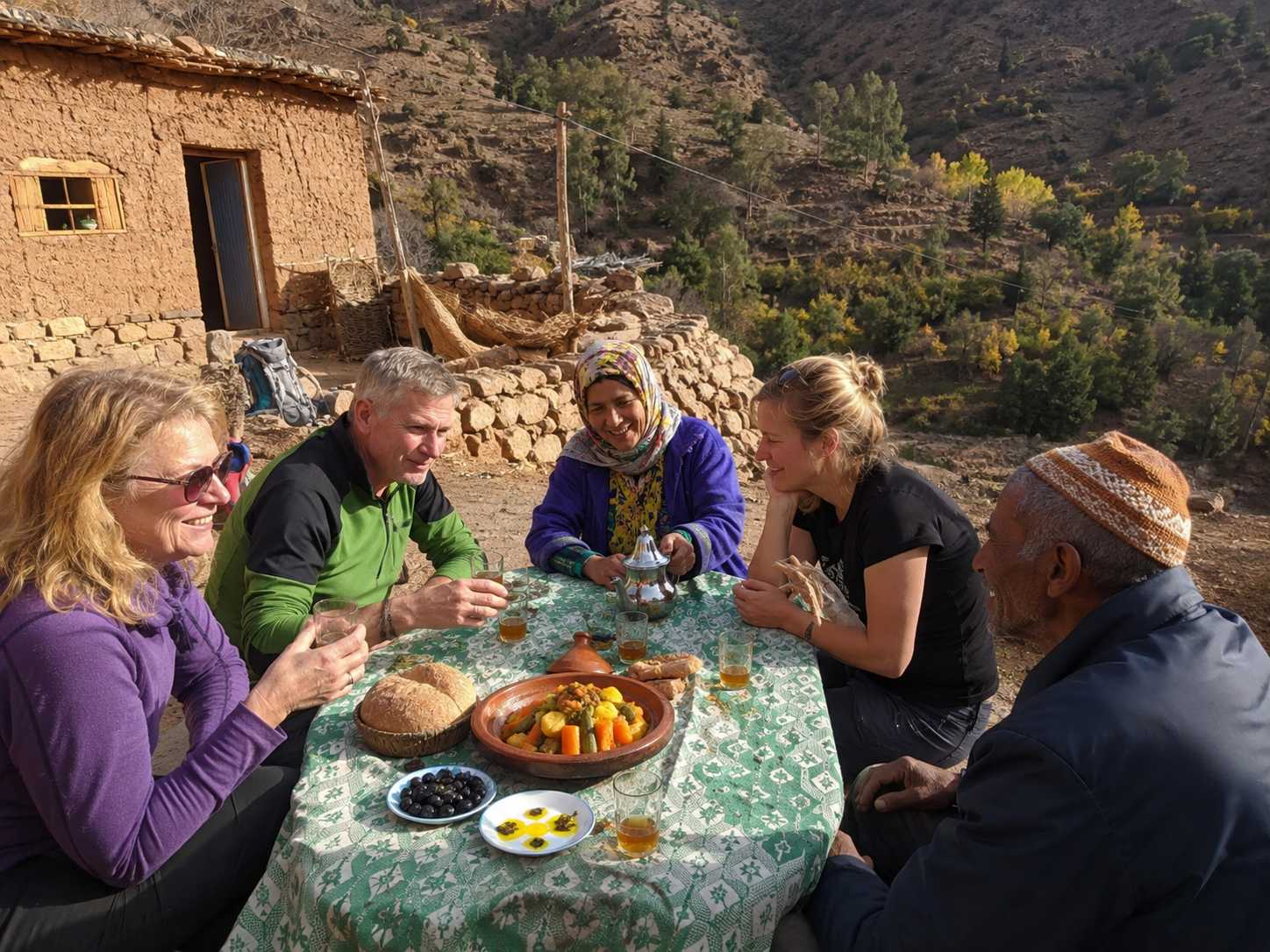
Many hiking routes pass through traditional Amazigh villages where life remains simple and deeply connected to nature.
During Hiking in Morocco, travelers often stop in family homes for tea, bread, olive oil, and homemade tagines.
These moments create meaningful cultural exchanges that make the journey richer.
In the Atlas Mountains, villages built from clay blend naturally into the landscape. In the Rif Mountains, whitewashed houses and green terraces create a completely different atmosphere.
These villages show the human side of Hiking in Morocco.
Beyond the physical challenge, hiking becomes a way to understand local traditions, hospitality, and rural life.
The Best Seasons for Hiking in Morocco’s Mountains and Valleys
Choosing the right season is important for successful Hiking in Morocco.
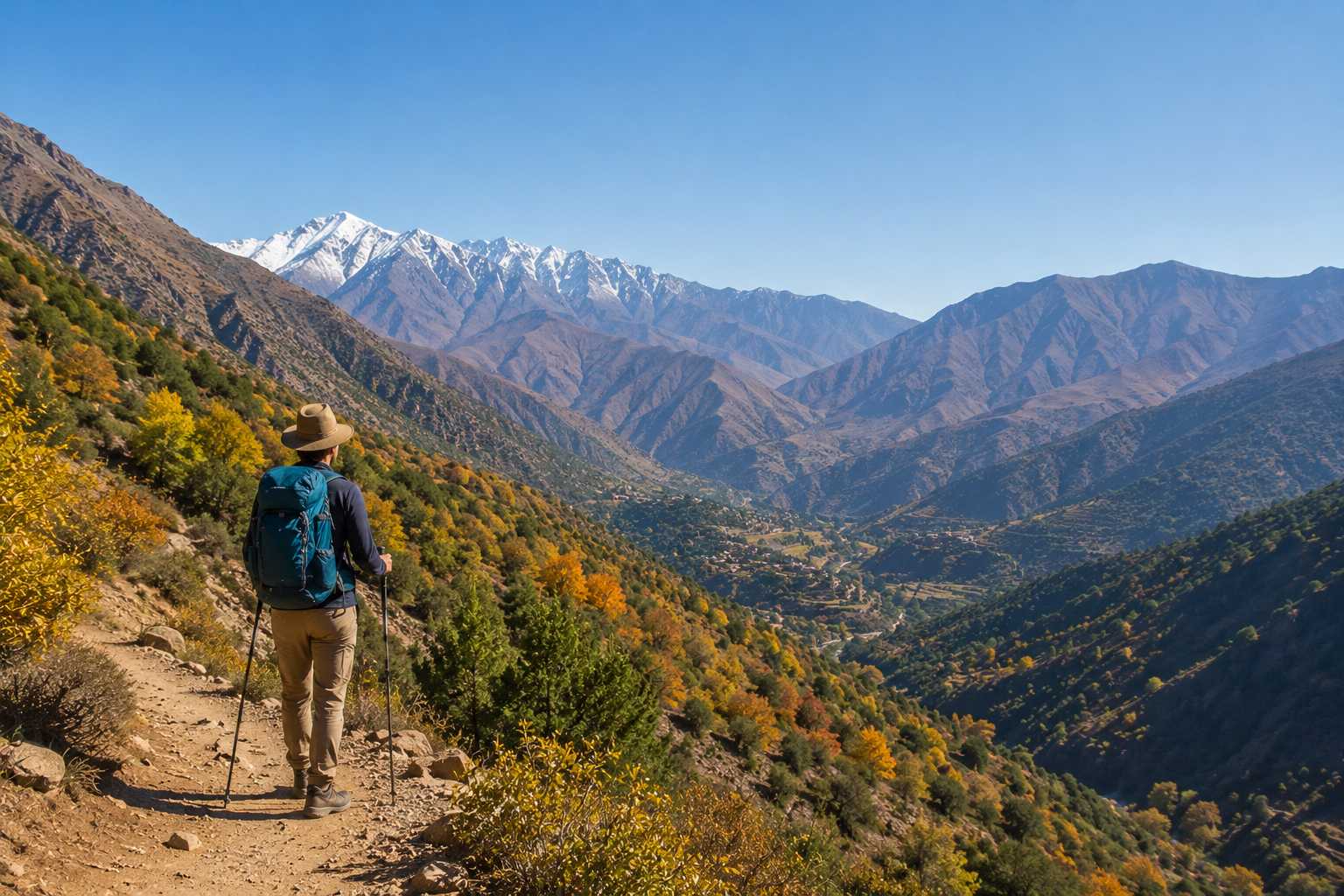
Spring is often considered the best season. During spring, valleys are green, flowers bloom, and temperatures are comfortable.
Autumn is another excellent time for Hiking in Morocco, especially in the Atlas and Rif regions. The weather remains mild, and the landscapes are colorful.
Summer can be challenging for low-altitude hikes because of the heat, but higher mountain routes remain accessible.
Winter offers unique opportunities for Hiking in Morocco, especially for snow lovers in the High Atlas. However, some routes become more difficult.
Understanding the seasons helps travelers enjoy safer and more enjoyable hiking experiences.
What to Pack for Hiking in Morocco’s Diverse Landscapes
Preparation is essential for Hiking in Morocco, especially because landscapes vary greatly.
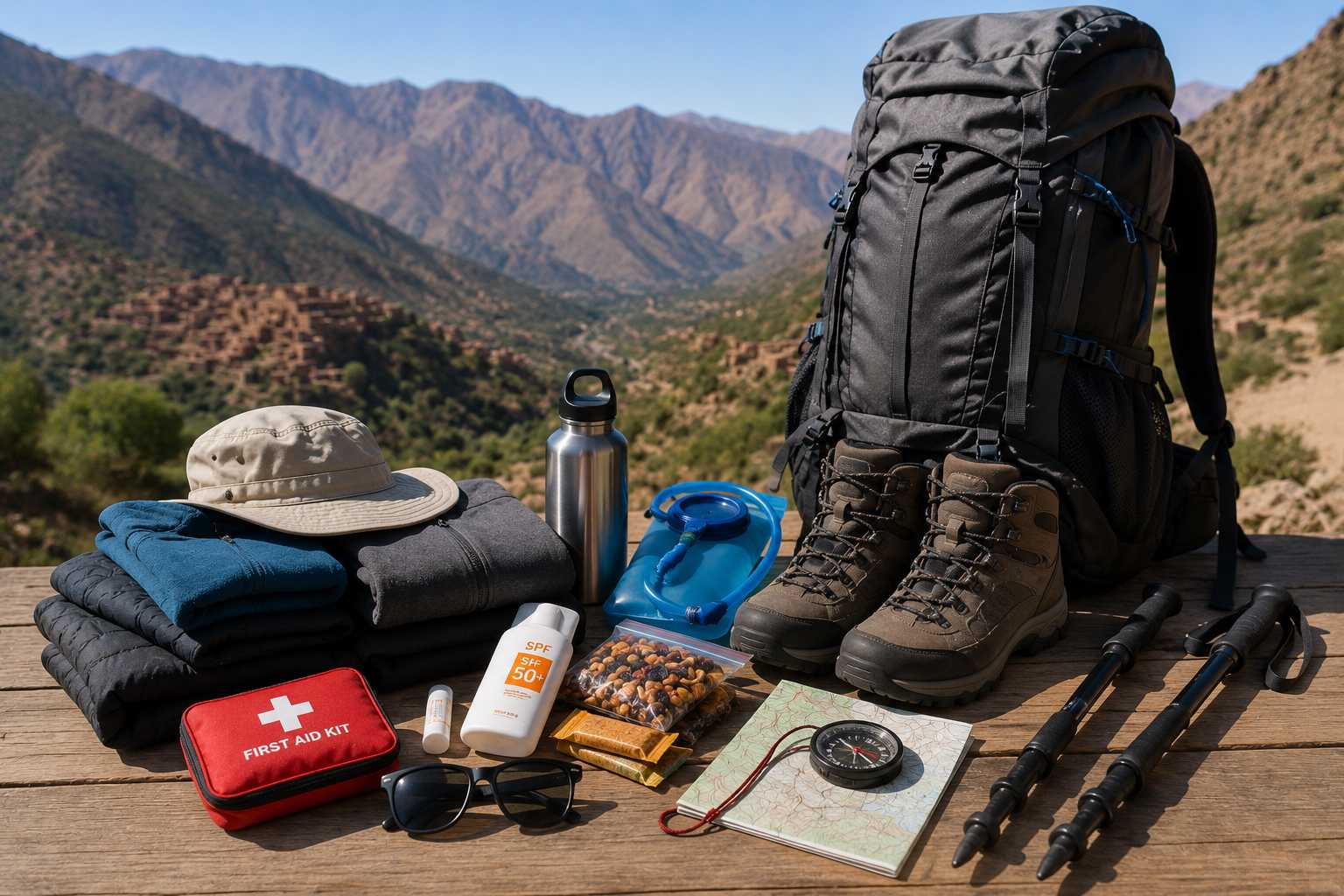
A good hiking backpack should include:
- Comfortable hiking boots
- Lightweight clothing for warm weather
- Warm layers for mountain nights
- Water bottles or hydration packs
- Sunscreen and sunglasses
- A hat for sun protection
- Energy snacks
- Basic first aid kit
- Navigation tools
For serious Hiking in Morocco, trekking poles can be very useful, especially on steep mountain trails.
Weather can change quickly in mountainous regions, so preparation is key.
Packing smart makes Hiking in Morocco safer and more comfortable.
Why Hiking in Morocco Is the Best Way to Discover the Country
Many travelers explore Morocco through cities, but Hiking in Morocco offers a deeper and more authentic perspective.
Walking through landscapes allows travelers to connect slowly with the country. Instead of rushing, they can observe details, meet locals, and appreciate the environment.
Hiking in Morocco reveals hidden waterfalls, isolated villages, mountain farms, and scenic viewpoints that are impossible to discover through traditional tourism.
It also creates a stronger emotional connection with the land.
For many travelers, Hiking in Morocco becomes the highlight of their journey because it combines physical challenge, cultural discovery, and personal reflection.
This makes hiking one of the most powerful ways to understand Morocco.
Hidden Natural Wonders Along Hiking in Morocco Trails
Beyond the famous routes, Hiking in Morocco hides many natural wonders.
Akchour’s waterfalls are among the most beautiful in northern Morocco.
The Dades Valley offers dramatic rock formations and deep valleys.
The rose valleys near Kalaat M’Gouna create incredible spring landscapes.
The oasis trails of southern Morocco provide a completely different hiking atmosphere.
These lesser-known destinations enrich the experience of Hiking in Morocco and offer adventure away from crowded tourist routes.
Exploring these hidden gems gives travelers a sense of discovery that makes every hike special.
For adventure lovers, Hiking in Morocco is one of the most rewarding ways to discover the country. From the hidden Rif Mountains to the majestic Atlas peaks, Morocco offers extraordinary diversity for hikers of all levels.
What makes Hiking in Morocco truly special is the combination of breathtaking nature and rich cultural encounters. Every trail tells a story, every village offers hospitality, and every landscape reveals a different face of Morocco.
Whether you are a beginner searching for peaceful walks or an expert seeking high-altitude challenges, Hiking in Morocco provides unforgettable adventures.
So, are you ready to discover Morocco one trail at a time and experience why Hiking in Morocco is becoming one of the country’s greatest attractions for adventure lovers?
Is Hiking in Morocco worth it?
Yes, Hiking in Morocco is worth it for travelers who want adventure, nature, and cultural discovery. The country offers Atlas Mountain peaks, Rif Mountain trails, green valleys, waterfalls, desert canyons, and traditional villages.
What are the best hiking destinations in Morocco?
The best hiking destinations in Morocco include the High Atlas Mountains, Mount Toubkal, Imlil Valley, Rif Mountains, Akchour waterfalls, Todra Gorge, Dades Valley, Aït Bouguemez Valley, Jbel Saghro, and the Ouzoud region.
Is Hiking in Morocco suitable for beginners?
Yes, Hiking in Morocco is suitable for beginners. Areas like Imlil Valley, Akchour, Ouzoud, and some Rif Mountain trails offer easier routes with scenic views and moderate walking conditions.
What is the best season for Hiking in Morocco?
Spring and autumn are the best seasons for Hiking in Morocco because the weather is mild and the landscapes are beautiful. Summer is better for high mountain routes, while winter is possible in some areas but can be difficult in snowy regions.
Do you need a guide for Hiking in Morocco?
A guide is not always required for easy trails, but it is recommended for remote areas, mountain routes, and challenging hikes like Mount Toubkal or Jbel Saghro. A local guide can improve safety and help travelers understand the culture and landscape.
What should you pack for Hiking in Morocco?
For Hiking in Morocco, travelers should pack comfortable hiking boots, layered clothing, sun protection, water, snacks, a hat, sunglasses, a basic first aid kit, and navigation tools. Warm layers are important for mountain evenings.