
Prince of Persia Filming Locations in Morocco: Where Was the Movie Filmed?
If you are wondering where Prince of Persia: The Sands of Time was filmed, Morocco is the answer to much of the movie’s spectacular scenery. The 2010 fantasy adventure starring Jake Gyllenhaal and Gemma Arterton was filmed across several Moroccan locations, including Ouarzazate, Aït Ben Haddou, Oukaïmeden, Tameslouht, Marrakech, and the desert around Erfoud and Merzouga.
The production used Morocco for far more than a simple desert backdrop. Mountain landscapes, ancient earthen architecture, oasis scenery and real desert dunes helped create the fictional Persian world of Dastan and Princess Tamina. Some locations are still accessible today, making a Prince of Persia filming locations tour an interesting way to combine cinema, Moroccan history and dramatic landscapes.
Where Was Prince of Persia Filmed in Morocco?
Prince of Persia: The Sands of Time was filmed partly in Morocco and partly at Pinewood Studios in England. Moroccan filming began in July 2008, with production moving between the High Atlas, Marrakech region, Ouarzazate and the southeastern desert.
The main Moroccan filming locations associated with the movie include:
- Ouarzazate and Kasbah Taourirt
- Aït Ben Haddou
- Oukaïmeden in the High Atlas
- Tameslouht near Marrakech
- Fint Oasis near Ouarzazate
- The desert around Erfoud and Merzouga
- Marrakech and surrounding areas
Each location contributed something different to the film. The result is one of the reasons Morocco works so convincingly as a cinematic stand-in for an ancient Persian landscape.
1. Aït Ben Haddou – The Royal City of Nasaf
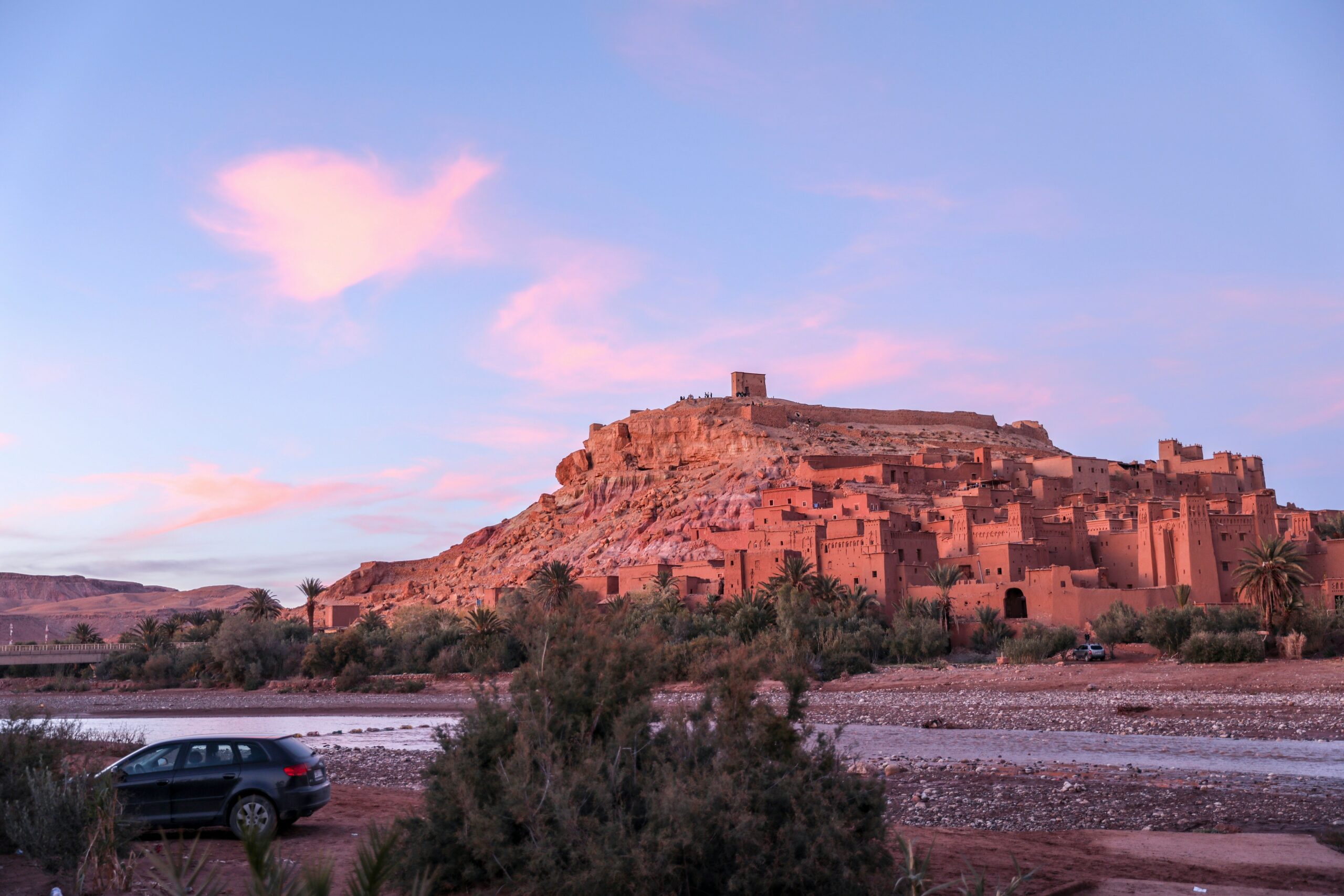
Among the most recognizable Prince of Persia filming locations in Morocco is Aït Ben Haddou, the famous fortified ksar near Ouarzazate.
In the film, Aït Ben Haddou was used as part of the setting for Nasaf, the royal city. The production also constructed and integrated additional elements around the existing architecture to create the marketplace seen in the movie.
Standing in front of Aït Ben Haddou today, it is easy to understand why filmmakers have repeatedly chosen it. The compact cluster of earthen buildings rises dramatically from the surrounding landscape, with narrow passages, towers and reddish walls creating a setting that can convincingly represent several historical periods and fictional worlds.
The ksar is also associated with other major productions, including Gladiator and The Mummy. This makes Aït Ben Haddou particularly worthwhile for travelers interested in Morocco’s film history as well as its architectural heritage.
If you want to explore another major production filmed in the same region, take a look at our guide to Kingdom of Heaven filming locations in Morocco.
Can you visit the Prince of Persia location at Aït Ben Haddou?
Yes. Aït Ben Haddou is a real historic site and can be visited independently or as part of a guided Morocco itinerary. You can walk through the old ksar, explore its lanes and viewpoints, and see the landscape that has appeared in numerous films.
The exact temporary sets and production elements built for Prince of Persia should not be confused with the historic ksar itself. Much of what visitors see today is the authentic architectural environment that existed long before the movie was filmed.
2. Ouarzazate – The Heart of Morocco’s Film Country
If there is one city that deserves to be at the center of a Prince of Persia filming locations Morocco itinerary, it is Ouarzazate.
Often associated with Morocco’s international film industry, Ouarzazate sits between the High Atlas and the desert regions of southern Morocco. Its surrounding landscapes, kasbahs, rocky valleys and dry climate have attracted filmmakers for decades.
For Prince of Persia, the production filmed scenes at Kasbah Taourirt, one of the city’s best-known historic landmarks. The kasbah represented the fictional city of Avrat in the movie.
Kasbah Taourirt is especially interesting because it is not simply a purpose-built movie set. It is a genuine historic kasbah with an intricate network of rooms, passages and earthen walls. Walking through it gives visitors a much better sense of the architecture that filmmakers were able to adapt for the fantasy world of the movie.
Ouarzazate is also home to Atlas Studios, one of the city’s major attractions for visitors interested in cinema. The studio complex and the surrounding region have been used by productions including Gladiator, The Mummy, Kingdom of Heaven and Prince of Persia.
For travelers fascinated by movie locations, Ouarzazate therefore offers something that many individual filming sites cannot: the opportunity to see both real Moroccan heritage and purpose-built cinematic environments in the same area.
3. Oukaïmeden – Prince of Persia in the High Atlas
The landscapes of Prince of Persia are not limited to deserts and kasbahs. Some of the production’s Moroccan filming took place high in the High Atlas Mountains at Oukaïmeden.
Oukaïmeden is located at high altitude south of Marrakech and is known today as a mountain destination and ski area. The location gave the film access to a very different landscape from the arid plains around Ouarzazate.
The production began its Moroccan work in the mountains, and reports from the shoot describe the altitude and demanding conditions faced by the cast and crew.
For visitors, Oukaïmeden is an excellent reminder that Morocco’s geography changes dramatically within a relatively short journey. From Marrakech, travelers can move from the city’s palm-lined streets into the Atlas foothills and eventually reach high mountain terrain.
This contrast also helps explain the visual variety of Prince of Persia. Morocco could provide mountain passes, rocky valleys, fortified villages, oasis landscapes and desert dunes without requiring the production to leave the country.
4. Tameslouht – The Setting Used for Alamut
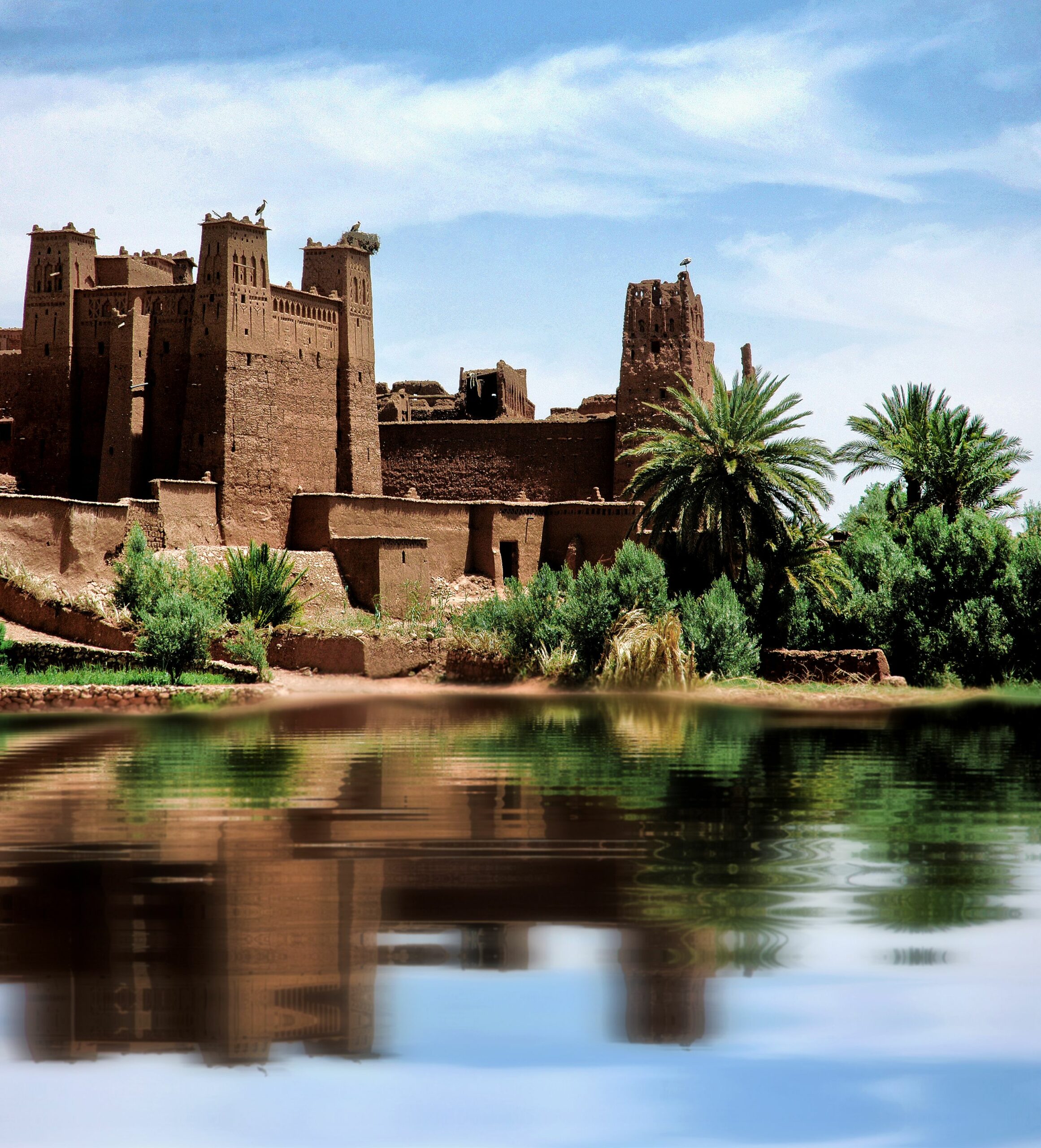
Another important location connected with the film is Tameslouht, a town southwest of Marrakech.
In Prince of Persia: The Sands of Time, Tameslouht was used to represent Alamut, the city associated with Princess Tamina. The production transformed the location with additional set elements to fit the fictional world of the story.
Tameslouht is less internationally famous than Aït Ben Haddou or Ouarzazate, which makes it particularly interesting for travelers who want to go beyond Morocco’s best-known movie locations.
Its position near Marrakech also makes it easier to incorporate into a wider itinerary exploring the region. Rather than treating the filming location as an isolated attraction, travelers can combine it with Marrakech, the Atlas Mountains and other nearby destinations.
5. Fint Oasis – Desert Scenery Near Ouarzazate
South of Ouarzazate lies Fint Oasis, a striking green oasis surrounded by an otherwise dry landscape. It was another important part of the Moroccan filming environment for Prince of Persia.
Production accounts describe filming at Little Fint, an oasis area outside Ouarzazate, where the crew faced difficult desert conditions and sandstorms.
The contrast between palms, water and rocky desert makes an oasis particularly effective on screen. It provides the visual ingredients associated with classic adventure cinema while remaining a real Moroccan landscape rather than an entirely artificial environment.
For travelers, Fint is also a useful stop when exploring the Ouarzazate area. It offers a quieter landscape than some of the region’s better-known attractions and demonstrates how dramatically the environment can change around the city.
6. Erfoud and the Merzouga Desert
The southeastern part of Morocco also contributed to the film’s desert landscapes. Sources documenting the production identify Erfoud and the dunes around Merzouga among the Moroccan locations associated with Prince of Persia.
This part of Morocco is very different from the High Atlas. Around Merzouga, the landscape is dominated by the dramatic dunes of Erg Chebbi, one of Morocco’s best-known Saharan landscapes.
The area is now one of the country’s most popular destinations for experiencing the Sahara. Visitors can travel through the desert region, spend a night in a desert camp, watch the sunset over the dunes or take part in a camel trek.
If your interest in Prince of Persia is also inspiring you to experience the landscapes that made Moroccan desert cinema so memorable, our Sahara Desert tour in Morocco can be a natural starting point.
Follow the Prince of Persia Route Through Morocco
Ready to see the landscapes behind Prince of Persia: The Sands of Time? Explore Aït Ben Haddou, Ouarzazate, the Atlas Mountains and the Sahara on a private Morocco journey designed around your interests.
Why Was Morocco Chosen for Prince of Persia?
Morocco gave the production an unusual combination of landscapes and architecture within one country.
The filmmakers could move from the high mountains of Oukaïmeden to the historic kasbahs of Ouarzazate and Aït Ben Haddou, then continue toward oasis landscapes and the Sahara. The production’s Moroccan locations therefore provided a wide visual vocabulary for a story inspired by a fictionalized ancient Persian world.
Director Mike Newell and producer Jerry Bruckheimer also filmed extensively on location in Morocco rather than relying entirely on studio environments. The production later continued at Pinewood Studios in Britain, where additional sets and scenes were created.
This combination of real landscapes and studio work is important when trying to identify Prince of Persia filming locations. Not every location seen in the movie corresponds to a single place that can be visited today. Some environments were enhanced, combined or recreated for the production.
How to Visit the Prince of Persia Filming Locations in Morocco
A movie-location trip does not have to follow the exact order in which the film crew traveled.
A practical itinerary can begin in Marrakech, then head toward the High Atlas and Oukaïmeden before continuing south toward the Ouarzazate area. From there, travelers can visit Kasbah Taourirt, explore nearby filming landscapes and continue to Aït Ben Haddou.
A longer journey can then continue toward the southeast, passing through the Dades Valley, Erfoud and eventually the Merzouga desert. This route combines several Prince of Persia locations with some of Morocco’s most distinctive landscapes.
For travelers who prefer a flexible itinerary, a private Morocco tour can make it easier to include filming locations alongside cultural and natural attractions without having to organize every transfer independently.
If you are planning a broader trip rather than a dedicated film tour, our guide to how many days you need in Morocco can also help you decide how much time to allow for the route.
Is Prince of Persia Worth Visiting as a Film-Focused Morocco Trip?
Absolutely, especially if you enjoy combining cinema with real places.
One of the biggest advantages of following Prince of Persia locations in Morocco is that the sites are not only interesting because they appeared on screen. Aït Ben Haddou has significant architectural and cultural value, Ouarzazate has a long relationship with international filmmaking, Oukaïmeden offers spectacular mountain scenery, and the Merzouga region provides an entirely different desert experience.
That means you can build a trip around the movie without spending your entire journey looking for film sets. Instead, the movie becomes a theme connecting several genuinely worthwhile Moroccan destinations.
It is also fascinating to see how filmmakers used Morocco’s natural geography to create a fictional world. The mountains, kasbahs, oases and dunes remain real long after the cameras have left.
Frequently Asked Questions
Where was Prince of Persia filmed?
Prince of Persia: The Sands of Time was filmed partly in Morocco and partly at Pinewood Studios in England. Moroccan locations included Ouarzazate, Aït Ben Haddou, Oukaïmeden, Tameslouht and desert areas around Erfoud and Merzouga.
Was Prince of Persia filmed in Aït Ben Haddou?
Yes. Aït Ben Haddou was used during the filming of Prince of Persia, including as part of the setting for the fictional city of Nasaf and its marketplace.
Was Prince of Persia filmed in Ouarzazate?
Yes. Ouarzazate was one of the film’s major Moroccan filming areas. Scenes were filmed at Kasbah Taourirt, which represented the fictional city of Avrat, while other locations around the region were also used.
Can you visit the Prince of Persia filming locations in Morocco?
Yes. Several of the locations are real places that travelers can visit, including Aït Ben Haddou, Kasbah Taourirt in Ouarzazate and Oukaïmeden. Some temporary movie sets and production elements, however, may no longer exist.
Was Prince of Persia filmed in the Sahara Desert?
Yes. The production used Moroccan desert environments, with filming associated with areas around Erfoud and Merzouga as well as the Ouarzazate region.
Can you visit the Gladiator filming locations today?
What other movies were filmed near Prince of Persia locations?
Morocco has been used for many major international productions. Ouarzazate and Aït Ben Haddou, in particular, are associated with films such as Gladiator, The Mummy and Kingdom of Heaven.
What is the best way to visit these filming locations?
The easiest approach is usually a private or customized itinerary connecting Marrakech, the High Atlas, Ouarzazate, Aït Ben Haddou and the southeastern desert. The ideal route depends on how many filming locations you want to include and whether you also want time for cultural and outdoor experiences.
The Prince of Persia filming locations in Morocco reveal just how much variety the country can offer filmmakers. From the mountain landscapes of Oukaïmeden to the ancient architecture of Aït Ben Haddou, the kasbahs of Ouarzazate and the dunes around Merzouga, Morocco provided the production with an extraordinary range of real-world settings.
Today, those locations can become part of an unforgettable Morocco journey. You can walk through the same historic landscapes used to create fictional cities, explore the region’s kasbahs and valleys, and continue south toward the Sahara.
For movie lovers, it is a chance to see Prince of Persia from a completely different perspective: not just as a fantasy adventure, but as a cinematic journey through some of Morocco’s most spectacular landscapes.