
Gladiator Filming Locations in Morocco: Where Was Gladiator Filmed?
If you are searching for the Gladiator filming locations in Morocco, the answer takes you straight to one of the country’s most cinematic regions: Ouarzazate and Aït Ben Haddou. Ridley Scott’s Gladiator (2000) filmed several of its North African sequences in and around Ouarzazate, using Morocco’s desert landscapes, historic architecture, and purpose-built film sets to create the fictional Roman province of Zucchabar.
The most recognizable Moroccan location is Aït Ben Haddou, the ancient earthen ksar that became Zucchabar in the movie. Nearby Ouarzazate was also used for scenes involving Maximus as a slave, desert travel, and gladiator training. The production even constructed a large arena near Aït Ben Haddou, although that temporary set was later removed. More than two decades later, Ridley Scott returned to Ouarzazate for Gladiator II, once again using Morocco to bring parts of the ancient world to the screen.
If you want to see these locations for yourself, you can still visit the real landscapes and historic sites that made the film so convincing. However, it is important to know which parts of the movie still exist, which were temporary sets, and where you should actually go.
What You’ll Discover in This Guide
This guide covers the main Gladiator filming locations in Morocco, including:
- Where Gladiator was filmed in Morocco
- Ouarzazate and its role in the production
- Atlas Studios and the Moroccan film industry
- Aït Ben Haddou and the fictional city of Zucchabar
- What happened to the original Gladiator arena
- Why Ridley Scott chose Morocco
- How Gladiator II returned to Ouarzazate
- How to visit the locations from Marrakech or Ouarzazate
- What you can realistically see today
The goal is simple: give you enough information to understand the movie locations and plan a real visit rather than simply listing film sites without context.
Where Was Gladiator Filmed in Morocco?
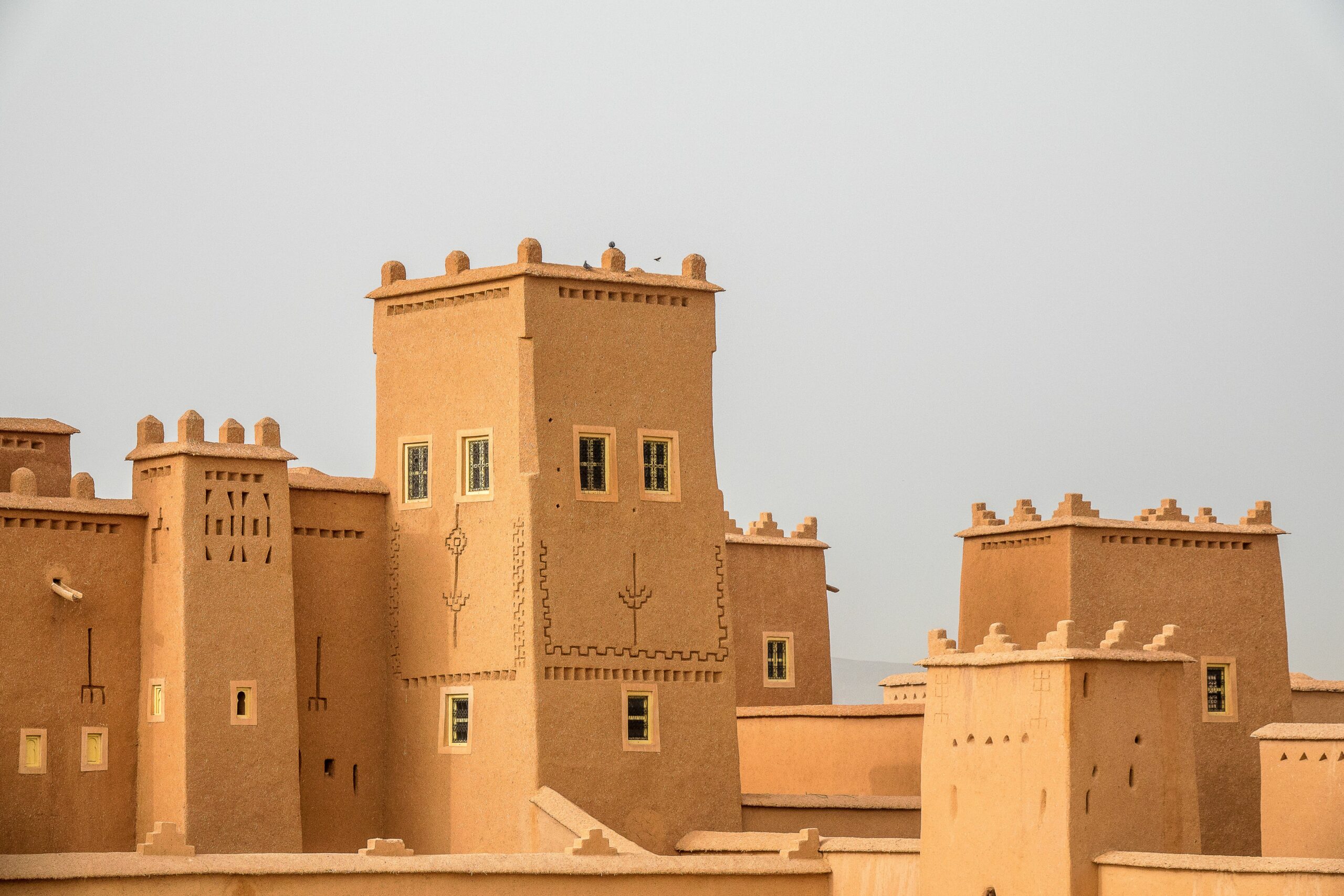
Gladiator was filmed in several countries, including England, Malta, Italy, and Morocco. Morocco was particularly important for the scenes representing North Africa, including the fictional Roman territory of Zucchabar and the surrounding desert landscapes.
The Moroccan filming took place mainly around Ouarzazate and Aït Ben Haddou, two locations that have become closely associated with international cinema. Ouarzazate provided access to large desert landscapes, established film facilities, and a long history of film production, while Aït Ben Haddou offered an authentic fortified settlement whose architecture could convincingly represent an ancient North African city.
For travelers, this distinction matters. Not every scene in Gladiator was filmed in one studio or at one monument. The Moroccan sequences were created using a combination of real landscapes, historic architecture, and temporary film construction.
Ouarzazate: The Main Moroccan Setting for Gladiator
Often called the gateway to Morocco’s desert regions, Ouarzazate has long been an important filming destination. Its surroundings offer dry valleys, rocky plateaus, mountains, and expansive landscapes that can stand in for very different historical locations.
For Gladiator, the region was used for several sequences connected to Maximus’s journey after he was captured. The Moroccan landscape helped establish the harsh environment surrounding the slave and gladiator storyline, giving the film the scale and atmosphere that Ridley Scott wanted.
The choice was also practical. Ouarzazate already had established film infrastructure, experienced local crews, and large areas where productions could construct sets without the restrictions associated with filming in densely populated cities.
That combination of landscape and production facilities is one reason Ouarzazate continues to attract major international productions.
Atlas Studios and Gladiator
One of the names most closely associated with cinema in Ouarzazate is Atlas Studios. The studio complex has hosted productions from around the world and has been used for major historical, biblical, fantasy, and adventure films.
Gladiator is among the major productions associated with the Ouarzazate film industry. The studio environment gave filmmakers the ability to construct controlled interiors and other elements of the production while the surrounding landscape provided the enormous outdoor settings required for the movie.
Atlas Studios is also part of a much larger cinematic history in the region. Productions connected with films such as Lawrence of Arabia, The Mummy, Kingdom of Heaven, Ben-Hur, and Game of Thrones have helped establish Ouarzazate as one of the world’s most recognizable filming destinations.
If you’re visiting Ouarzazate specifically because of its movie history, a studio visit can add another layer to the experience. Access and available sets can vary depending on current productions, so it is worth checking conditions before making a studio visit the central part of your itinerary.
Aït Ben Haddou: The Moroccan Location That Became Zucchabar
Among all the Gladiator filming locations in Morocco, Aït Ben Haddou is probably the most visually recognizable.
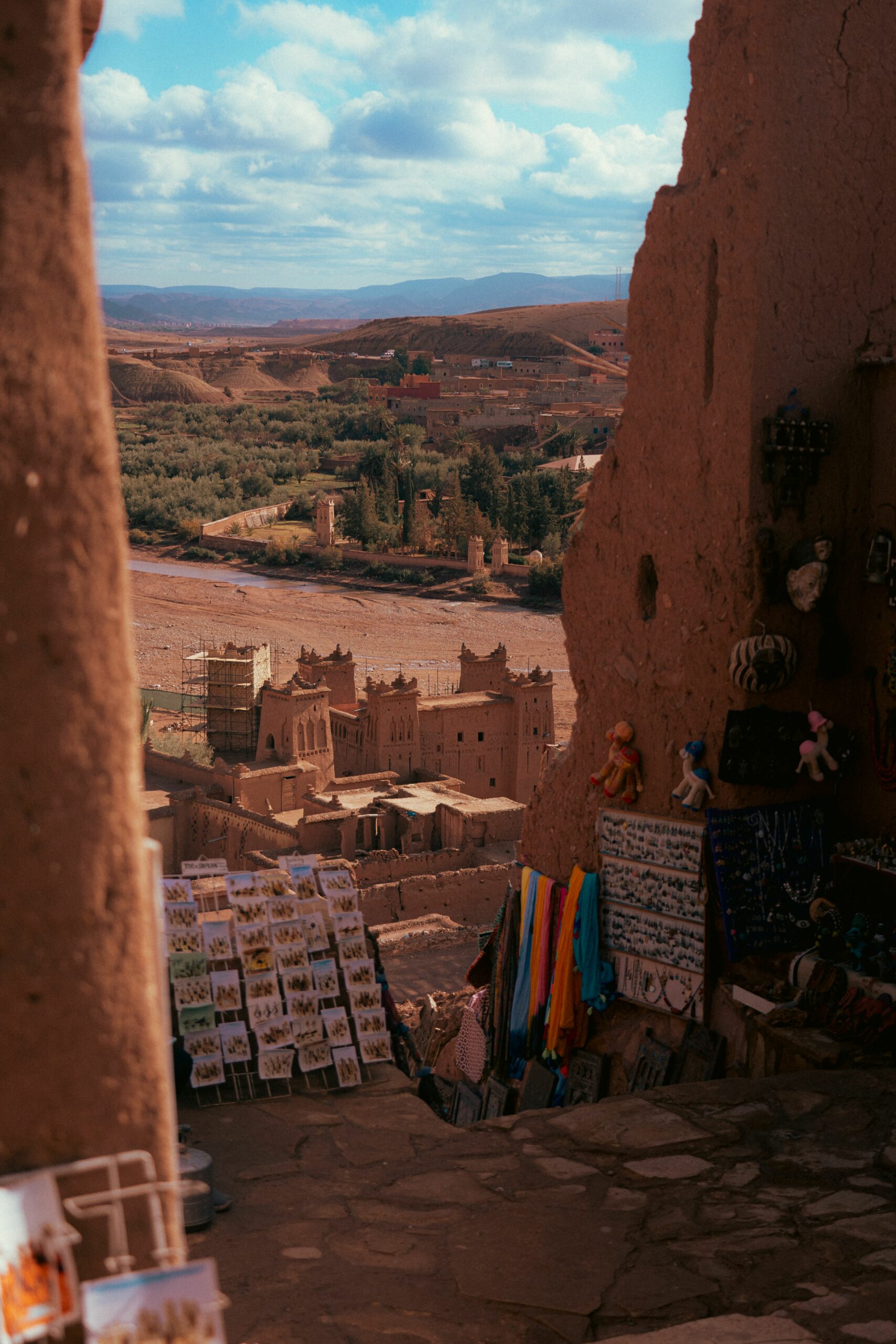
Located along the former caravan routes between the Sahara and Marrakech, Aït Ben Haddou is a historic fortified ksar made up of earthen buildings, narrow passages, towers, and defensive walls. Its architecture has made it one of Morocco’s most famous filming locations, but its importance goes far beyond cinema.
In Gladiator, Aït Ben Haddou was transformed on screen into Zucchabar, the fictional North African city where Maximus is taken after being enslaved. The filmmakers used the existing architecture as part of the visual identity of the city, allowing the location itself to provide much of the atmosphere.
The result is one of the film’s most memorable Moroccan settings: a dusty, fortified settlement surrounded by an environment that feels dramatically different from the Roman world introduced elsewhere in the movie.
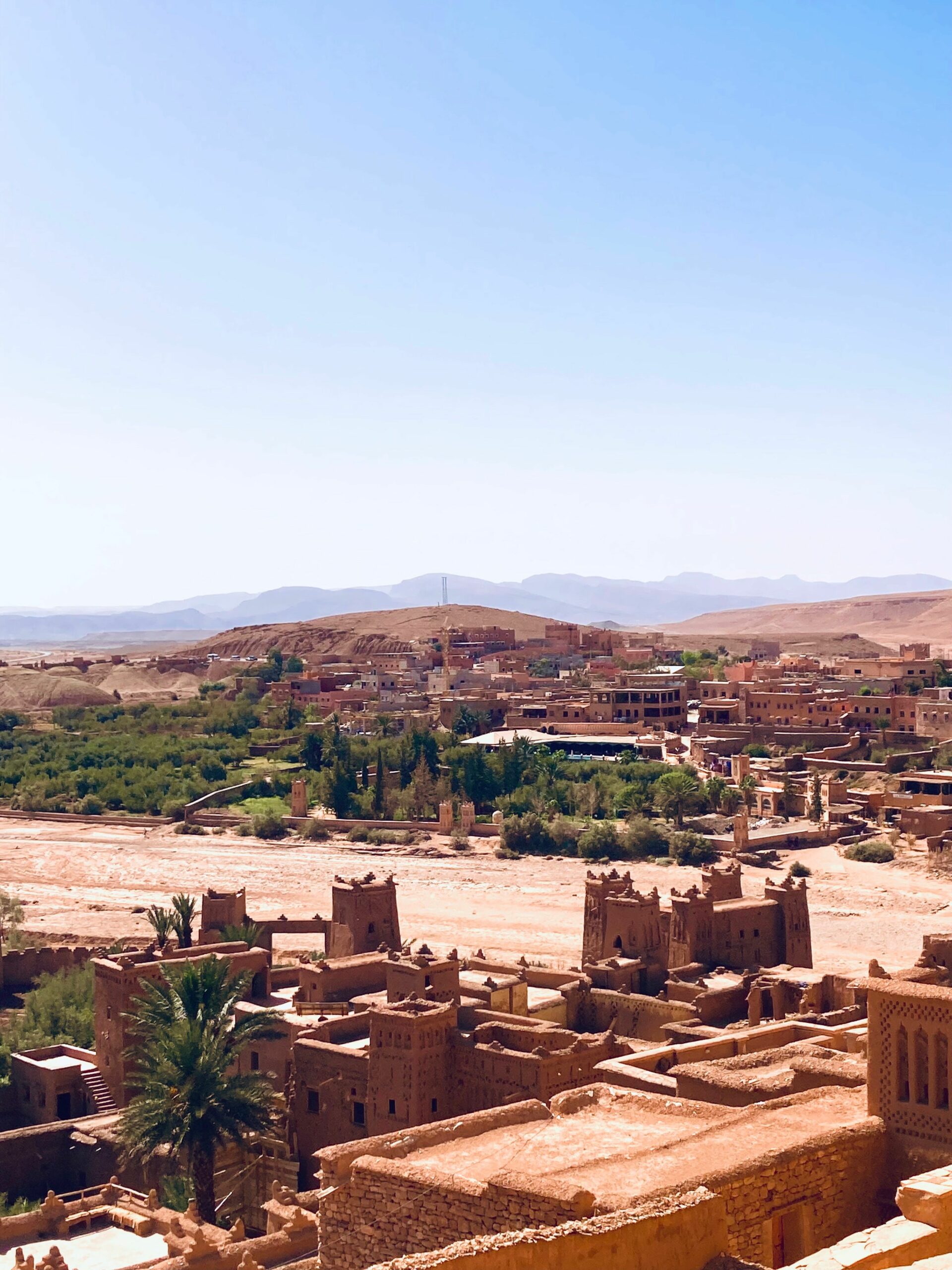
Aït Ben Haddou is still standing today, which makes it one of the easiest Gladiator locations for travelers to experience in person.
However, there is an important difference between Aït Ben Haddou and the movie’s arena: Aït Ben Haddou is a real historic site, while the arena was a temporary film set.
The Gladiator Arena in Morocco: Is It Still There?
This is one of the most common questions from people planning a Gladiator filming-location trip.
The answer is no. The large arena constructed for Gladiator near Aït Ben Haddou was a temporary production set and was later dismantled.
The arena was built specifically for the film and was used for scenes connected with the gladiatorial storyline. Because it was created for the production rather than being an ancient monument, it was never intended to remain as a permanent attraction.
This is important when planning your visit. You should not travel to Aït Ben Haddou expecting to find the original Gladiator arena still standing. What you can see is the spectacular historic ksar that appeared as Zucchabar, along with the surrounding landscapes that helped create the film’s North African world.
The temporary nature of film sets is actually part of what makes Ouarzazate interesting. Productions can transform an ordinary landscape or build an entire city for a movie, then remove it once filming is finished.
Why Did Ridley Scott Choose Morocco for Gladiator?
Morocco offered something Gladiator needed in abundance: scale.
The landscapes around Ouarzazate can look almost otherworldly on camera. Dry mountains, rocky plains, desert roads, kasbahs, and wide horizons allow filmmakers to create convincing ancient settings without relying entirely on digital environments.
Aït Ben Haddou added another advantage. Its earthen architecture already has the appearance of a settlement from another period, meaning filmmakers could adapt the location rather than constructing every building from scratch.
There was also a practical filmmaking advantage. Ouarzazate had already developed an ecosystem around international productions, including studios, crews, workshops, equipment, and local expertise.
For a historical epic like Gladiator, Morocco therefore offered both visual authenticity and production flexibility.
Gladiator II Returned to Ouarzazate
Morocco’s connection with the franchise did not end with the original movie.
When Ridley Scott returned with Gladiator II, production once again used Ouarzazate and the surrounding region. Morocco represented parts of Numidia and other ancient settings in the sequel, continuing the tradition of using the region’s landscapes to recreate the ancient world.
One particularly interesting connection is the reuse of a major set originally created for another Ridley Scott production. The old Kingdom of Heaven Jerusalem set in the Ouarzazate film-studio area was transformed and adapted for Gladiator II, rather than simply being used exactly as it had appeared in the earlier film.
This shows how the film industry in Ouarzazate works over time. A set created for one historical production can later be modified, expanded, or completely reimagined for another movie.
So if you’re interested in both Gladiator and Gladiator II, Ouarzazate offers an especially interesting connection between the two productions.
Can You Visit the Gladiator Filming Locations in Morocco?
Yes. The most accessible locations are Aït Ben Haddou and the Ouarzazate film-studio area.
Aït Ben Haddou is a real historic site and can be explored on foot. Walking through its passages and looking back at the fortified settlement from the surrounding landscape gives you a much better sense of why filmmakers have repeatedly chosen it for historical productions.
Ouarzazate offers a different experience. Here, the attraction is not simply one movie location but the wider film-making heritage of the region. A studio visit can be particularly interesting for travelers who want to see how large-scale productions have recreated ancient cities, temples, streets, and other environments.
Keep in mind that studio access and available sets can change depending on active productions, so the experience is not necessarily identical from one visit to another.
How to Visit the Gladiator Filming Locations from Marrakech
If you’re staying in Marrakech, one of the easiest ways to experience the Gladiator locations is to travel toward Ouarzazate and Aït Ben Haddou.
The route crosses the High Atlas Mountains before descending toward the landscapes of southern Morocco. Aït Ben Haddou is one of the main highlights along this journey, while Ouarzazate can be added to explore the region’s film history and surrounding scenery.
For a shorter option, a private day trip can focus on Ouarzazate and Aït Ben Haddou, although the journey is long enough that you should expect an early start and a full day on the road.
For travelers who want more time in the region, a multi-day itinerary makes considerably more sense because it allows you to combine the movie locations with the Dades Valley, desert landscapes, and other southern Moroccan destinations.
You can explore a dedicated day trip from Marrakech to Ouarzazate and Aït Ben Haddou if your priority is seeing the major film locations without committing to a longer tour.
Visiting from Ouarzazate
If you’re already in Ouarzazate, visiting the film locations becomes much easier. You can use the city as a base for exploring Aït Ben Haddou, the surrounding landscapes, and the local film heritage.
This is also a good option for travelers who want to slow down rather than treating Ouarzazate as a quick stop between Marrakech and the Sahara.
MT Morocco Travel also offers a dedicated selection of tours from Ouarzazate, making it easier to combine the film locations with other destinations in southern Morocco. Combine Gladiator Locations with the Sahara
For many travelers, the best option is not to visit Ouarzazate only for Gladiator. The region works particularly well as part of a larger southern Morocco itinerary.
You can visit Aït Ben Haddou and Ouarzazate, continue through the Dades Valley, and then head toward the Sahara. This gives you the chance to experience the landscapes that make this part of Morocco so visually distinctive rather than spending most of your time in the car on a Marrakech day trip.
A 3-day Sahara tour from Ouarzazate to Marrakech can be one way to combine the film-location experience with the desert and other southern destinations.
If you prefer a slower itinerary with more time for sightseeing, a 5-day desert tour from Ouarzazate to Marrakech provides considerably more room to explore the landscapes between Ouarzazate and Marrakech.
What to Expect When Visiting the Gladiator Locations
One of the biggest mistakes travelers can make is expecting the movie locations to look exactly as they did on screen.
Film productions modify real places. They add buildings, remove modern elements, construct temporary structures, change streets, bring in props, and sometimes combine several locations to create one fictional setting.
That is exactly what happened with Gladiator. The landscape and Aït Ben Haddou are real, but the world presented in the film was carefully constructed through production design.
The original arena is no longer there, so don’t make the arena your main reason for visiting. Instead, focus on the parts of the cinematic landscape that have survived: Aït Ben Haddou, Ouarzazate, the surrounding desert scenery, and the broader film heritage of the region.
And remember that Aït Ben Haddou is not a movie theme park. It is a historic Moroccan settlement with its own cultural and architectural importance, and the film connection is only one part of its story.
Other Movies Filmed Around Ouarzazate and Aït Ben Haddou
If Gladiator is what brings you to this region, you may quickly discover that it is only one chapter of a much larger film history.
Ouarzazate and Aït Ben Haddou have appeared in numerous major international productions. Depending on the location and production, the region has been used to represent places as different as ancient Rome, Jerusalem, Egypt, North Africa, and fictional worlds.
Films and series associated with the wider Ouarzazate area include Lawrence of Arabia, The Mummy, Kingdom of Heaven, Ben-Hur, Game of Thrones, and many others.
That makes a trip here particularly rewarding for movie fans. You are not visiting one isolated filming location; you are entering an entire landscape that has repeatedly been transformed for cinema.
Why Gladiator Fans Should Visit Morocco
For fans of Gladiator, visiting Morocco offers something that watching the movie cannot.
You can stand in front of Aït Ben Haddou and recognize the architecture that became Zucchabar. You can explore Ouarzazate, the city that has supported generations of international productions, and see the landscapes that helped Ridley Scott create the film’s North African world.
At the same time, you get to experience Morocco beyond the movie. The journey can include mountain passes, historic kasbahs, valleys, desert landscapes, local villages, and the Sahara.
That combination is what makes a film-location trip here worthwhile. The movie gives you a reason to come, but the destination gives you plenty of reasons to stay.
Frequently Asked Questions
Where was Gladiator filmed in Morocco?
Several Moroccan sequences of Gladiator were filmed around Ouarzazate and Aït Ben Haddou. The region was used for scenes involving Maximus’s enslavement, desert travel, gladiator training, and the fictional North African setting of Zucchabar.
Was Gladiator filmed at Aït Ben Haddou?
Yes. Aït Ben Haddou was used as Zucchabar, the fictional North African settlement in the film. The existing historic architecture became part of the movie’s visual setting, while additional temporary construction was used for the production.
Is the Gladiator arena still in Morocco?
No. The arena built for the original Gladiator was a temporary film set and was later removed. Aït Ben Haddou itself remains and can still be visited.
Was Gladiator filmed at Atlas Studios?
The Ouarzazate film industry and Atlas Studios are strongly associated with the production of Gladiator, while Moroccan sequences were also filmed in the surrounding outdoor locations. It is more accurate to think of the production as using the wider Ouarzazate area rather than assuming every Moroccan scene was filmed inside the studio.
Did Gladiator II film in Morocco?
Yes. Gladiator II returned to Ouarzazate and Morocco for parts of its production, continuing the franchise’s connection with the region. The sequel also adapted an existing Kingdom of Heaven set for new scenes.
Can you visit the Gladiator filming locations today?
Yes. Aït Ben Haddou is open to visitors and is one of the easiest locations to experience. Ouarzazate’s film heritage can also be explored, including studio-related attractions, although access to individual sets may depend on current filming activity.
How long do I need to visit the Gladiator locations?
Aït Ben Haddou and Ouarzazate can be visited on a long day trip from Marrakech, but a multi-day southern Morocco itinerary is a better option if you also want to experience the Dades Valley, desert landscapes, or the Sahara without rushing.
Visit the Gladiator Filming Locations in Morocco
Want to see the landscapes that became Zucchabar in Gladiator? Explore Aït Ben Haddou, Ouarzazate, and the spectacular southern Morocco landscapes on a private trip from Marrakech or Ouarzazate.