
The Odyssey Filming Locations in Morocco: Where Was It Filmed?
Christopher Nolan’s The Odyssey brings Homer’s legendary epic to the screen with a production that spans some of the world’s most striking landscapes. Morocco plays an important part in that visual journey, with filming taking place across several regions, from the historic architecture of southern Morocco to the Atlantic coast and the remote landscapes around Dakhla.
So, where was The Odyssey filmed in Morocco? The Moroccan filming locations include Aït Benhaddou, Essaouira, Ouarzazate, Marrakech, Tahanaout, El Haouz, and Dakhla. Among these, Aït Benhaddou is particularly significant because the famous Moroccan ksar was used to portray Troy, while Essaouira provided the Atlantic setting for scenes involving the Trojan Horse.
For travelers and movie fans, these locations offer something especially interesting: they are not artificial backlots that disappeared after filming. They are real Moroccan destinations that can still be visited, explored, and incorporated into a wider Morocco itinerary.
Where Was The Odyssey Filmed in Morocco?
The Moroccan production of The Odyssey made use of a remarkably diverse collection of landscapes. Filming locations associated with the movie extend from the Marrakech region and the High Atlas foothills to Ouarzazate, Aït Benhaddou, Essaouira, and the far south around Dakhla.
Aït Benhaddou near Ouarzazate was transformed into the ancient city of Troy, giving the production a historic-looking setting built from traditional earthen architecture. On the Atlantic coast, Essaouira Beach was used for scenes involving the Trojan Horse, while locations around Marrakech, Tahanaout, and El Haouz added further Moroccan landscapes to the production.
The variety is important because Homer’s story takes Odysseus through constantly changing environments. Morocco can provide many of those visual contrasts within a single country, which makes it particularly effective for large-scale historical and mythological filmmaking.
Aït Benhaddou: The Moroccan Troy in The Odyssey
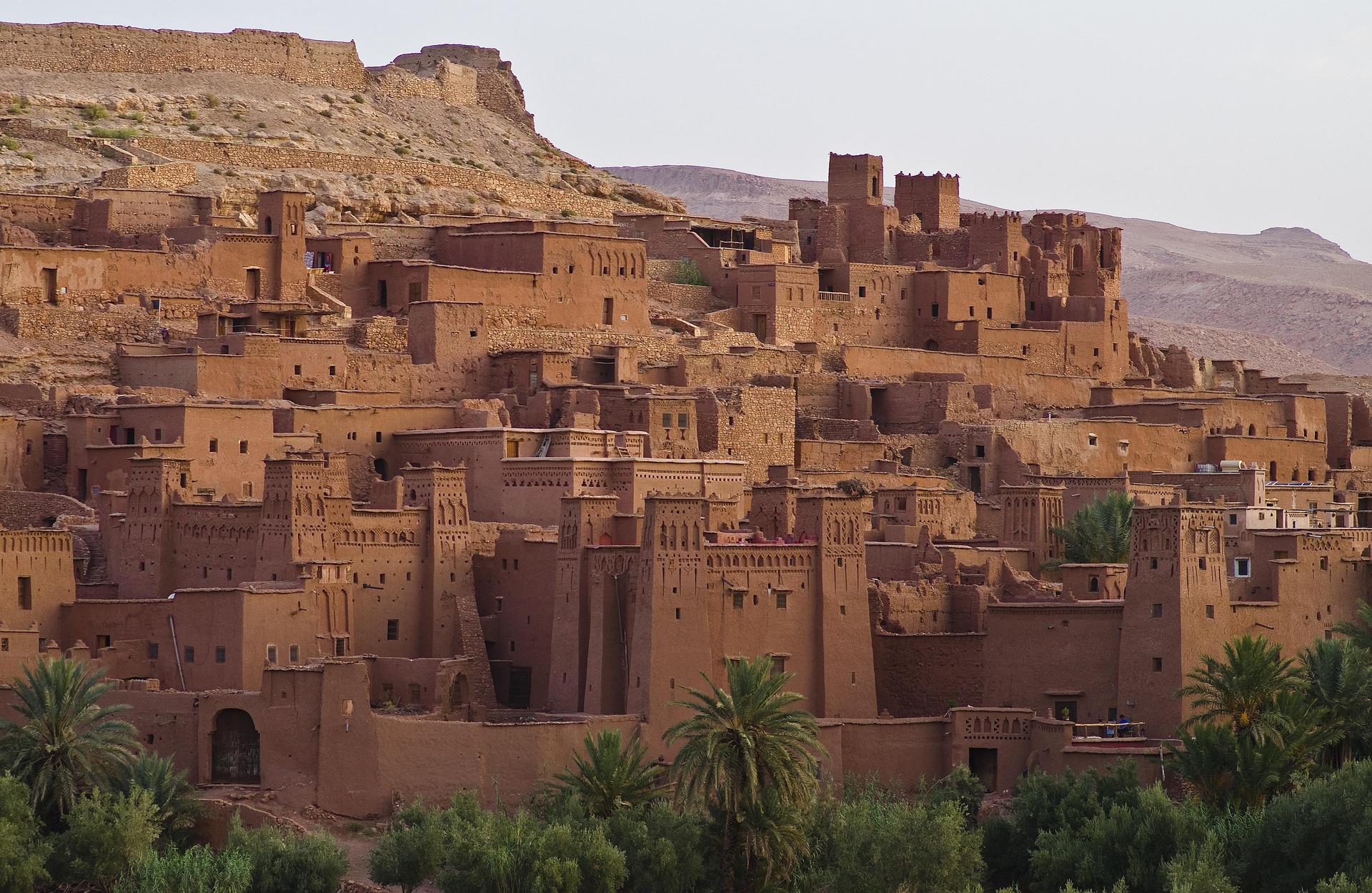
If you are looking for the most important The Odyssey filming location in Morocco, Aït Benhaddou is the place to start. Located in Ouarzazate Province, this spectacular fortified ksar is one of southern Morocco’s best-known landmarks and was used to represent Troy in the film.
The settlement is made up of traditional earthen buildings, defensive walls, towers, and narrow passages that create a remarkably convincing ancient-city appearance. For a story set in the world of the Trojan War, its architecture provides an authentic visual texture that would be difficult to recreate with a conventional modern filming location.
In The Odyssey, Aït Benhaddou forms part of the cinematic representation of Troy and the events surrounding the Trojan War. The location therefore has particular significance for viewers interested in seeing the real landscape behind the movie.
Aït Benhaddou is also a UNESCO World Heritage Site, making it a destination worth visiting regardless of its connection to cinema. Travelers can walk through the historic settlement, climb toward its higher points, and look across the surrounding landscape that has helped make the Ouarzazate region famous among filmmakers and photographers.
Can You Visit Aït Benhaddou?
Yes. Aït Benhaddou is a real historic site and can be visited as part of a trip through southern Morocco. It is commonly combined with Ouarzazate, the High Atlas Mountains, the Draa Valley, and longer journeys toward the Sahara.
For travelers starting in Marrakech, Aït Benhaddou can be incorporated into a multi-day route through the Atlas Mountains and southern Morocco. Rather than treating it as a quick movie stop, it is worth allowing enough time to explore the ksar and understand its architecture and history.
If you are planning a wider journey through the country, you can also explore the Morocco travel blog for more destination ideas and travel inspiration.
Essaouira: The Atlantic Coast in The Odyssey
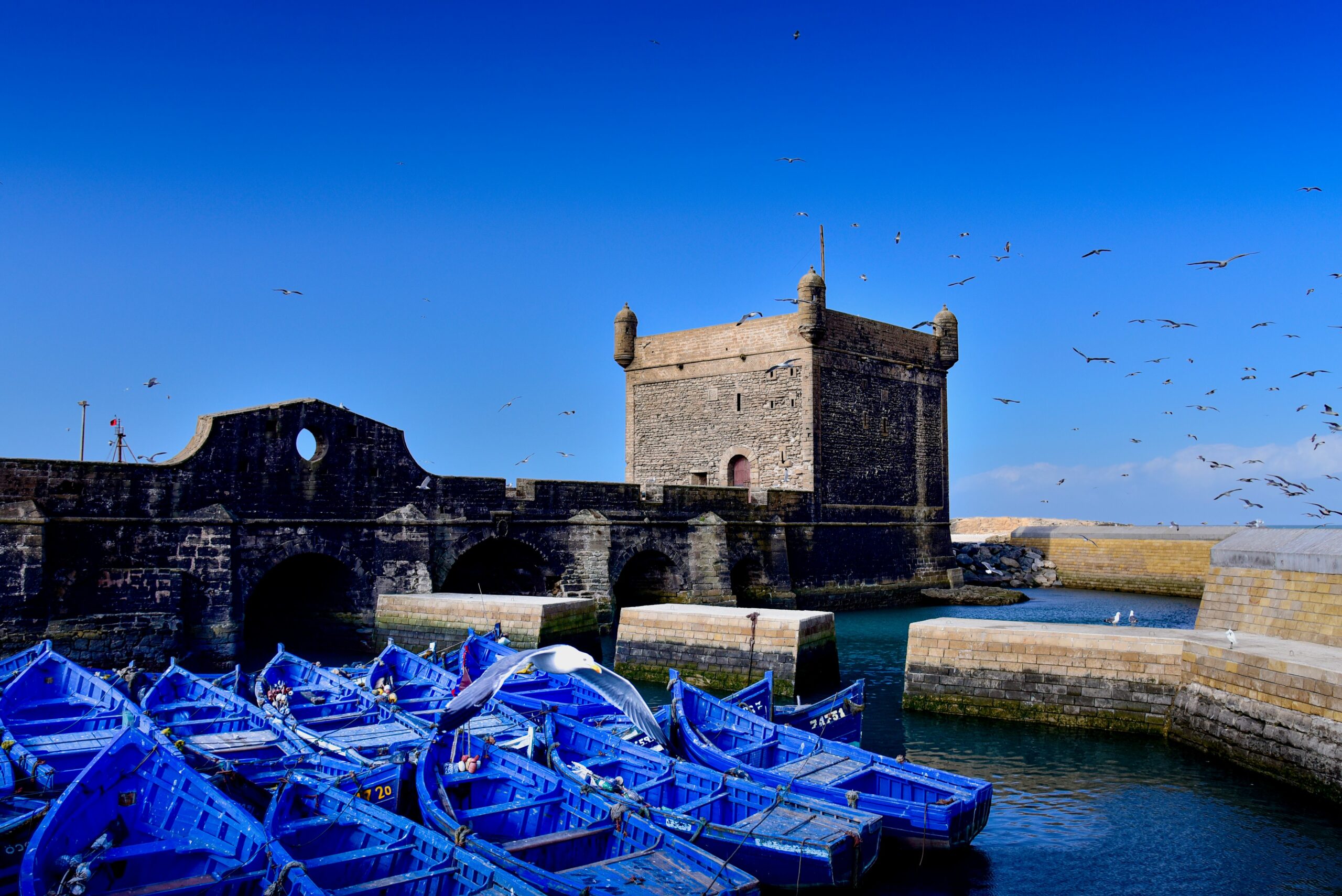
Another major The Odyssey filming location in Morocco is Essaouira, the historic coastal city on Morocco’s Atlantic coast. The production used Essaouira Beach for scenes involving the Trojan Horse, adding a very different visual environment to the Moroccan portion of the film.
The broad beach and open Atlantic horizon provide a natural contrast to the enclosed architecture of Aït Benhaddou. Where the Moroccan ksar can suggest a fortified ancient city, Essaouira’s coastline creates a sense of openness and scale that suits the epic nature of Homer’s story.
Essaouira is also an especially convenient filming location for travelers. The city combines its famous Atlantic beach with a historic medina, old ramparts, a fishing port, traditional markets, and a distinctive coastal atmosphere. Visitors can therefore experience the setting used in the movie while also discovering one of Morocco’s most atmospheric destinations.
For movie fans, a walk along the beach provides a simple way to connect the finished film with the real landscape. The scenery may look different depending on the season, weather, and filming setup, but the coastline itself remains very much part of the city.
What Else Can You See in Essaouira?
Essaouira deserves more than a short stop for its connection to The Odyssey. Its medina is ideal for walking, while the historic ramparts offer views across the Atlantic and the fishing harbor provides another glimpse of the city’s traditional character.
The city is also easy to combine with Marrakech, making it practical for travelers who want to include a movie-location experience without building their entire itinerary around cinema.
Ouarzazate: The Heart of Morocco’s Film Landscape
Aït Benhaddou may be the most recognizable The Odyssey location in the region, but Ouarzazate itself deserves attention. Often associated with Morocco’s international film industry, the city sits among landscapes that have attracted filmmakers looking for historic architecture, mountains, desert scenery, and expansive cinematic backdrops.
The region’s filmmaking reputation developed over many years, with Ouarzazate and its surrounding areas appearing in numerous international productions. The city is also home to Atlas Studios, one of Morocco’s best-known film studios, reinforcing its identity as an important production center.
For someone following The Odyssey filming locations, Ouarzazate is therefore useful as more than a gateway to Aït Benhaddou. It provides an opportunity to explore the wider environment in which Morocco’s cinematic landscape has developed.
A visit can also be combined with other southern destinations, allowing travelers to experience the scenery beyond the movie itself. This is particularly appealing if your interest in The Odyssey is part of a broader fascination with movies filmed in Morocco.
Marrakech and The Odyssey Filming Locations
The Moroccan production also filmed in and around Marrakech, making the Red City another relevant point for travelers interested in The Odyssey. Marrakech provides a very different environment from the remote landscapes of southern Morocco, but its surrounding region offers easy access to mountains, valleys, and rural landscapes.
Locations connected with the Moroccan shoot include Tahanaout and El Haouz, areas south of Marrakech and close to the High Atlas. Their inclusion highlights the geographical variety of the production and shows that Morocco’s contribution to the film was not limited to its most famous landmarks.
For travelers, Marrakech is one of the most practical starting points for exploring these landscapes. You can combine time in the medina and historic center with a journey toward the High Atlas and southern Morocco, depending on how much time you have.
If you want to explore the region through an organized itinerary, take a look at tours from Marrakech and consider building a route that includes the landscapes associated with The Odyssey.
Tahanaout and El Haouz: The High Atlas Landscapes
The areas around Tahanaout and El Haouz add another geographical dimension to The Odyssey filming locations in Morocco. Situated south of Marrakech, these landscapes form part of the transition between the city and the dramatic foothills of the High Atlas.
Unlike Aït Benhaddou, these areas are not defined by a single famous monument. Their appeal lies in the wider landscape, including mountain foothills, valleys, villages, and open countryside. For filmmakers, such environments can provide a natural backdrop that can be adapted to different locations within an epic story.
Travelers visiting the Marrakech region can experience these landscapes without necessarily following a dedicated movie tour. They are already part of some Atlas Mountain itineraries, making them easy to combine with hiking, cultural visits, and scenic drives.
This is one of the reasons Morocco works so well as a filming destination: the visual character of the landscape can change dramatically as you travel only a relatively short distance.
Dakhla and the White Dune
Farther south, the The Odyssey production also filmed at the White Dune near Dakhla. This remote coastal landscape is one of the most visually distinctive locations associated with the Moroccan production.
The White Dune rises from the coastal environment, creating a striking contrast between pale sand and surrounding water. The combination of desert-like terrain and ocean makes the area particularly effective for a story that moves through mythical islands and unfamiliar worlds.
The location was associated with Ogygia, the island where Odysseus encounters Calypso in Homer’s epic. This gives the Dakhla landscape a very different role from Aït Benhaddou, which represents the world of Troy.
Dakhla is much farther from Morocco’s traditional tourist circuits around Marrakech and Ouarzazate, so visiting the White Dune requires additional planning. For dedicated movie fans, however, its unusual landscape can make it one of the most memorable stops on a cinematic journey through Morocco.
Follow the Prince of Persia Route Through Morocco
Ready to see the landscapes behind Prince of Persia: The Sands of Time? Explore Aït Ben Haddou, Ouarzazate, the Atlas Mountains and the Sahara on a private Morocco journey designed around your interests.
That variety is especially valuable for Homer’s story because Odysseus does not remain in one type of environment. His journey crosses seas, islands, cities, wilderness, and unfamiliar territories, requiring a production design capable of constantly changing the visual atmosphere.
Morocco also has extensive experience with international productions. Ouarzazate and Aït Benhaddou have long been associated with large-scale filmmaking, while the country’s diverse architecture and landscapes have appeared in productions set in many different periods and places.
For The Odyssey, the result is a cinematic journey that benefits from real landscapes rather than relying entirely on artificial environments. The Moroccan locations give the film a tangible sense of place while allowing each setting to feel visually distinct.
Is Aït Benhaddou the Real Troy?
No. Aït Benhaddou is not the historical city of Troy. It is a Moroccan ksar that was transformed into the cinematic version of Troy for The Odyssey.
The archaeological site traditionally associated with ancient Troy is located in modern-day Türkiye. Aït Benhaddou, meanwhile, is a historic fortified settlement in Morocco with its own architectural and cultural history.
This distinction is important for travelers researching The Odyssey filming locations. Visiting Aït Benhaddou does not mean visiting the historical Troy of Homer’s world; it means visiting the real Moroccan landscape that filmmakers selected and transformed to portray Troy on screen.
That transformation is part of what makes movie tourism in Morocco so interesting. A place can have a genuine history of its own while simultaneously becoming recognizable to audiences as somewhere entirely different.
Can You Visit The Odyssey Filming Locations in Morocco?
Several of the Moroccan filming locations associated with The Odyssey can be visited by travelers. Aït Benhaddou and Essaouira are among the most accessible, while Marrakech and Ouarzazate provide practical bases for exploring surrounding locations.
Aït Benhaddou works particularly well as part of a southern Morocco itinerary. Travelers can combine the ksar with Ouarzazate, the High Atlas, traditional kasbahs, and routes toward the Sahara.
Essaouira offers a different type of experience and can be incorporated into a coastal itinerary from Marrakech. Meanwhile, Dakhla requires considerably more travel planning because of its location in Morocco’s far south.
If you want to combine filming locations with a personalized Morocco itinerary, you can contact MT Morocco Travel to discuss the destinations and route that best fit your trip.
How to Plan a The Odyssey Filming Locations Trip
If your main goal is to see the most recognizable The Odyssey locations, a trip combining Marrakech, Aït Benhaddou, and Ouarzazate is a logical starting point. This route allows you to experience the High Atlas, the historic ksar used as Troy, and the wider landscape around Morocco’s famous film city.
Travelers with more time can extend the journey toward Essaouira, creating a trip that combines both the southern Moroccan architecture and the Atlantic coastline seen in the production. This also gives you the opportunity to experience two very different sides of Morocco rather than focusing exclusively on movie sets.
For a longer adventure, Dakhla can be considered separately as a far-southern extension. Because of the distance involved, it makes more sense to plan the White Dune as part of a wider Dakhla trip rather than attempting to squeeze it into a short itinerary from Marrakech.
Most importantly, allow yourself time to enjoy the destinations themselves. Aït Benhaddou is a remarkable heritage site, Essaouira has a distinctive Atlantic culture, and Ouarzazate offers a fascinating connection with Morocco’s filmmaking history.
Other Movies Filmed in Morocco
The Odyssey is part of a much longer relationship between Morocco and international cinema. The country’s landscapes have frequently been used to represent ancient cities, biblical settings, medieval kingdoms, fictional worlds, and desert environments.
The Ouarzazate region is particularly well known for this history. Aït Benhaddou has become one of Morocco’s most recognizable movie locations, while the surrounding landscapes have provided filmmakers with settings that can be transformed into almost any historical or fictional world.
For travelers who enjoy cinema, this creates an interesting opportunity to build an itinerary around several productions. Instead of visiting one location and leaving, you can explore the wider region and discover how the same Moroccan landscapes have been reimagined for completely different stories.
That cinematic history adds another layer to a Morocco trip, especially for visitors who already recognize Aït Benhaddou or Ouarzazate from movies and television.
Frequently Asked Questions About The Odyssey Filming Locations in Morocco
Where was The Odyssey filmed in Morocco?
The Odyssey was filmed across several Moroccan locations, including Aït Benhaddou, Essaouira, Marrakech, Tahanaout, El Haouz, Ouarzazate, and Dakhla. The locations provided a mixture of historic architecture, mountain landscapes, Atlantic coastline, and remote southern scenery.
Was The Odyssey filmed at Aït Benhaddou?
Yes. Aït Benhaddou near Ouarzazate was used to represent Troy in The Odyssey. Its traditional earthen architecture and fortified appearance provided a convincing setting for the world of the Trojan War.
Where was the Trojan Horse scene filmed?
The Trojan Horse scenes associated with the Moroccan production were filmed at Essaouira Beach on Morocco’s Atlantic coast. The wide shoreline provides an open coastal environment that contrasts with the fortified architecture of Aït Benhaddou.
Is Aït Benhaddou the real Troy?
No. Aït Benhaddou is a historic Moroccan ksar and UNESCO World Heritage Site. It was used as the cinematic representation of Troy in The Odyssey, while the archaeological site traditionally identified as Troy is located in modern-day Türkiye.
Where was Ogygia filmed in The Odyssey?
The Moroccan location associated with Ogygia is the White Dune near Dakhla. Its unusual combination of pale sand and coastal water creates a distinctive landscape suitable for the mythical island setting.
Can tourists visit The Odyssey filming locations in Morocco?
Yes. Locations such as Aït Benhaddou and Essaouira are accessible to travelers, while Marrakech and Ouarzazate can serve as useful bases for exploring nearby filming locations. Dakhla is also accessible but requires more extensive travel planning because of its distance from the country’s main tourist routes.
What is the best starting point for a The Odyssey filming locations tour?
For most travelers, Marrakech is a practical starting point because it provides access to the High Atlas, Aït Benhaddou, and Ouarzazate. A longer itinerary can then continue toward Essaouira or other Moroccan destinations depending on your interests and available time.
Final Thoughts on The Odyssey Filming Locations in Morocco
The The Odyssey filming locations in Morocco offer a fascinating connection between one of the world’s oldest epic stories and some of the country’s most recognizable landscapes. From Aït Benhaddou as Troy to the Atlantic shores of Essaouira, the Moroccan locations give the production a remarkable visual range.
For travelers, the experience is even more interesting because these are real destinations rather than inaccessible movie sets. You can walk through Aït Benhaddou, explore the streets and ramparts of Essaouira, discover Ouarzazate’s cinematic heritage, or travel farther south toward the White Dune near Dakhla.
If Christopher Nolan’s The Odyssey has inspired you to discover the places behind the film, Morocco offers the perfect opportunity to turn that curiosity into a real journey. The movie may create a mythical world on screen, but the landscapes that helped bring it to life are waiting to be explored in the real world.